✦ AI-generated review
The Burden of Red
If there is one thing Paru Itagaki understands, it is that society is a cage we build for ourselves. In *BEASTARS*, she used the predator-prey dynamic to explore adolescent anxiety; in *SANDA*, she strips away the fur and fangs to reveal something perhaps more unsettling: the terrifying commodification of youth. Released in late 2025 by the visionary studio Science SARU, *SANDA* initially presents itself as a chaotic gag—a teenage boy discovers he is the descendant of Santa Claus—but quickly reveals itself to be a grim, dystopian critique of a world that loves children so much it refuses to let them breathe.
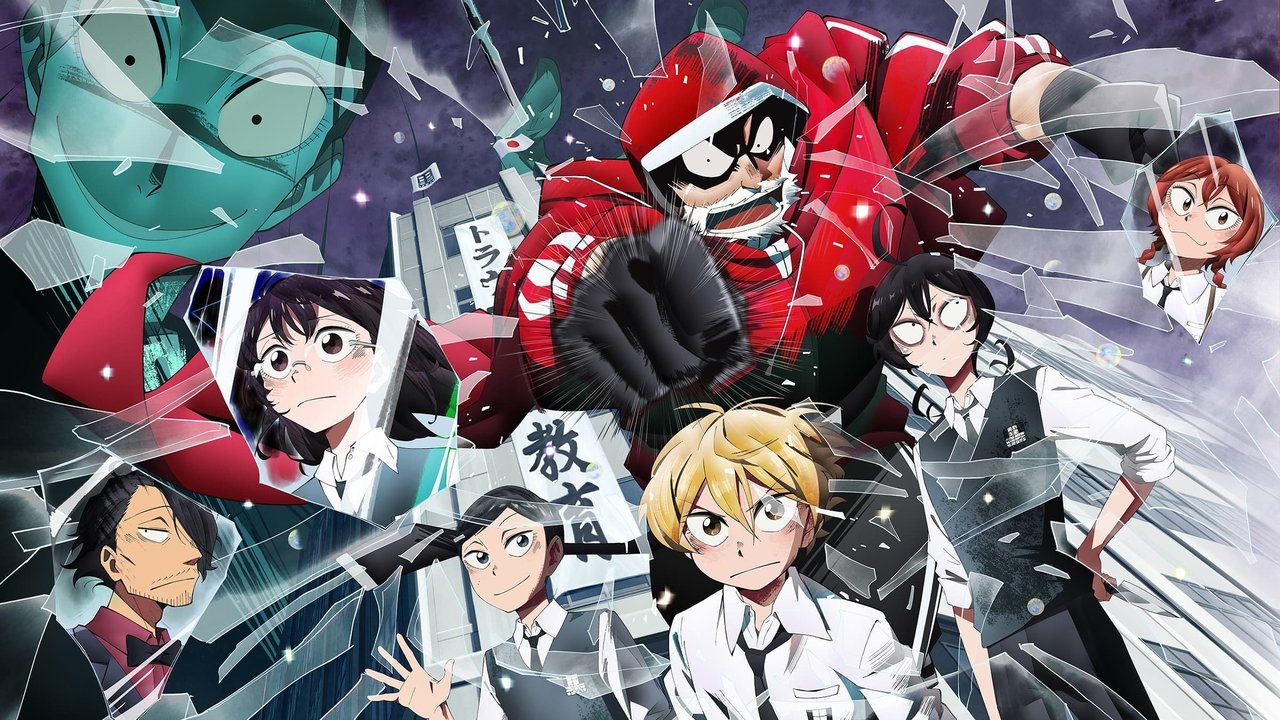
To dismiss *SANDA* as merely "the Santa Claus anime" is to misread its temperature entirely. The series operates in a near-future Japan suffocated by a plummeting birthrate. Here, children are not just loved; they are national assets, protected to the point of imprisonment. This is the central irony Itagaki and director Tomohisa Shimoyama exploit with surgical precision. The narrative hook—where classmate Shiori Fuyumura attempts to stab the protagonist, Kazushige Sanda, not out of malice but to awaken his dormant powers—is a shocking violation of the "protected child" ethos. It sets the stage for a show that is constantly at war with its own tone, swinging violently between high-school awkwardness and bloody, supernatural horror.
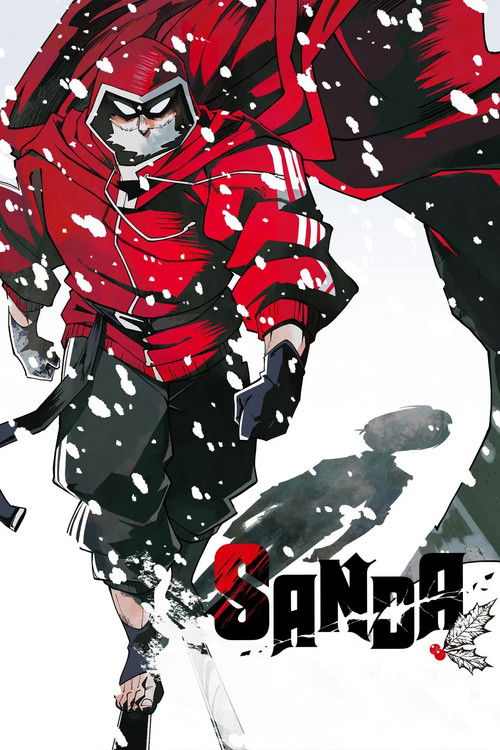
Visually, Science SARU proves to be the only studio capable of keeping pace with Itagaki’s frantic imagination. Known for their work on *Devilman Crybaby* and *Dandadan*, the studio brings a fluidity to the animation that makes the grotesque feel elegant. The color red is weaponized here. In a world of sterile, muted institutional greys, the crimson of Sanda’s "Santa" form isn’t just a festive callback; it’s a violent disruption. When Sanda transforms, aging rapidly into a hulking, bearded figure, the animation emphasizes the sheer physical weight of this change. It is not a magical girl transformation of sparkles and grace; it is a uncomfortable biological lurch, a visual metaphor for the trauma of being forced to grow up too fast to solve someone else's problems.
At its heart, *SANDA* is a tragedy about agency. Sanda himself is a fascinatingly passive protagonist, a boy who wants to be normal in a world that demands he be a myth. His relationship with Fuyumura is not built on romance, but on a desperate, transactional need. She needs a savior; he needs to survive her attempts to make him one. This dynamic inverts the traditional superhero trope: Sanda does not put on the mask to express his true self; he puts it on to become a tool for others. The scenes where he must eat jellybeans to revert to his child form are played for laughs, yet they carry a melancholy aftertaste—he is literally consuming candy to reclaim his stolen childhood.
Currently airing its debut season, *SANDA* challenges the viewer to look past the absurdity of its premise. It suggests that in a society obsessed with preserving innocence, we often end up destroying the very people we claim to protect. This is not a holiday special to warm the heart; it is a blistering, bizarre, and deeply human examination of generational weight. Itagaki and Science SARU have delivered a gift that is strange, sharply wrapped, and impossible to return.