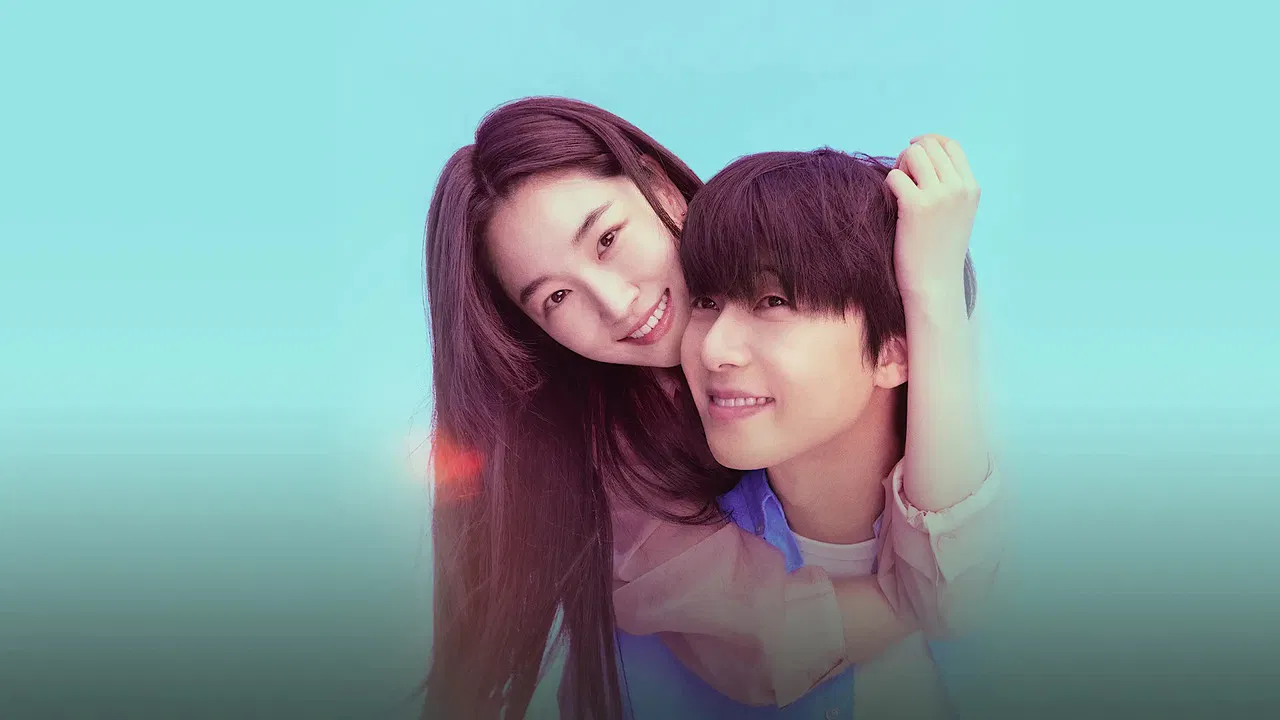
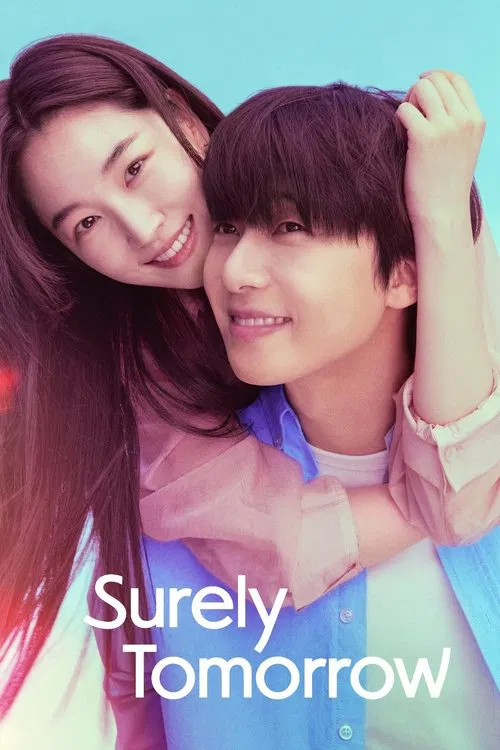
The Architecture of RegretIn the vast, often glossy machinery of the Korean romance genre, memory is usually treated as a warm filter—a nostalgic haze that softens the edges of the past. But in *Surely Tomorrow* (2025), memory is a jagged thing. Directed by Im Hyun-wook and written by Yoo Young-ah, this twelve-episode series eschews the typical "fate brought us together" optimism for something far more bruising: the idea that time doesn't heal all wounds, but rather calcifies them into habits. Here, the reunion of two former lovers isn't a destiny fulfilled, but a collision of two people who have survived the wreckage of their own choices.
The series marks a significant return to the romance genre for Park Seo-jun, yet those expecting the polished, confident tycoon of *What’s Wrong with Secretary Kim* will find a stranger here. As Lee Gyeong-do, an entertainment journalist seemingly resigned to the cynical churn of scandal-mongering, Park inhabits a physicality of exhaustion. His shoulders slump under the weight of his own bylines. The director utilizes a visual language that emphasizes isolation even in crowded newsrooms; the color grading is frequently muted, stripping the vibrancy from Seoul’s cityscape to mirror Gyeong-do’s internal stagnation. When he breaks the story of a chaebol’s affair, only to discover the wife at the center of the storm is his twice-ex-girlfriend Seo Ji-woo (Won Ji-an), the camera doesn't zoom in for a dramatic gasp. Instead, it lingers on the silence, capturing the terrifying quiet of a realization that comes too late.

The narrative structure, oscillating between their naive twenties and their weathered thirties, risks feeling disjointed, but instead serves as a forensic investigation of their relationship. We see the "why" of their failures not as a single dramatic event, but as a slow erosion of trust. Won Ji-an, holding her own against Park’s star power, plays Ji-woo not as a victim of her husband’s infidelity, but as a woman who has long been a prisoner of her own pragmatism. The chemistry between them in the present timeline is devoid of the usual electric sparks; it is replaced by the heavier, denser gravity of shared history. The "scandal" plotline—often a sensationalist crutch in lesser dramas—is surprisingly secondary. The real tension lies in the dialogue, stripped of affectation, where apologies are swallowed and resentments simmer just beneath the surface.

Ultimately, *Surely Tomorrow* is a meditation on the courage it takes to admit that "moving on" is a myth. The script suggests that we do not actually leave our past selves behind; we carry them, screaming and kicking, into our futures. While the pacing occasionally stumbles under the weight of unnecessary subplots involving secondary characters, the core emotional thesis remains piercingly sharp. It asks if love is enough to bridge the gap between who we were and who we were forced to become. In a landscape of disposable content, this series stands as a melancholic, necessary reminder that the hardest person to forgive is often the one staring back from the mirror.