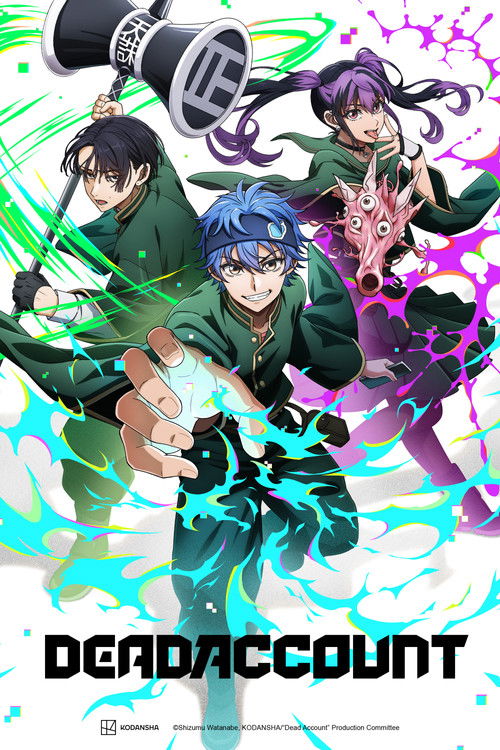
The Ghost in the FeedWe often say the internet is forever, that our digital footprints outlive our physical bodies. But rarely does a series literalize this anxiety with as much kinetic energy and surprising poignancy as *Dead Account*, the 2026 adaptation of Shizumu Watanabe’s manga. In an era saturated with "content"—a word that reduces art to filler—director Keiya Saito presents a story that is explicitly about the cost of that content. This is not merely another entry in the crowded shonen exorcism genre; it is a sharp, neon-lit parable about how we monetize our own dehumanization, and what lingers in the servers after the user has logged off.

The premise initially reads like a cynicism simulator. We are introduced to "Aoringo," a streamer who has mastered the dark art of "flame-baiting." He is loud, abrasive, and engineered to be hated. Yet, the series quickly peels back the UI to reveal Soji Enishiro, a desperate brother turning the world’s vitriol into cash to pay for his sister’s medical bills. When the supernatural element kicks in—the revelation that spirits possess social media accounts, turning digital regrets into physical monsters—the show finds its unique visual language. Studio SynergySP, often known for workmanlike productions, punches above its weight here. The animation weaponizes the aesthetic of the smartphone interface; attacks are framed like notifications, and spiritual energy crackles with the blue-light hue of an LED screen. It creates a suffocating sense of reality where the spiritual world isn't a distant realm, but an overlay on our daily scroll.

However, the film (or rather, this cinematic opening to the series) succeeds not because of its "tech-orcism" gimmicks, but because of its emotional anchor. Nobuhiko Okamoto’s performance as Soji is a tightrope walk between the manic, performative "Aoringo" and the quiet, terrified brother beneath. The central tragedy—that the sister he debased himself to save becomes a "Bake-Account," a digital spirit he must now confront—recontextualizes the typical battle anime structure. We are not watching a hero fight to save the world; we are watching a boy fight the ghost of his own failure. The "Dead Accounts" he battles are not faceless monsters; they are manifestations of unfinished business and online toxicity, making every exorcism feel like a deletion of a painful memory.
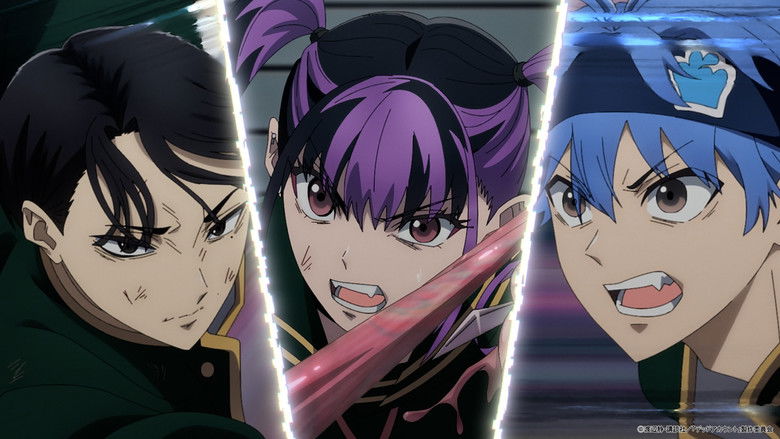
Ultimately, *Dead Account* asks us to consider what we feed the algorithm. By equating "flaming" online with literal spiritual warfare, the series suggests that our digital aggression has a metaphysical weight. While it indulges in the high-octane tropes of its demographic—shouted attack names and defying gravity—it possesses a melancholy undercurrent about the permanence of our digital lives. It is a stylish, frenetic reminder that while accounts can be banned, the human impulses behind them cannot be so easily exorcised. In a medium obsessed with the next big thing, *Dead Account* makes a compelling case for examining what we’ve left behind.