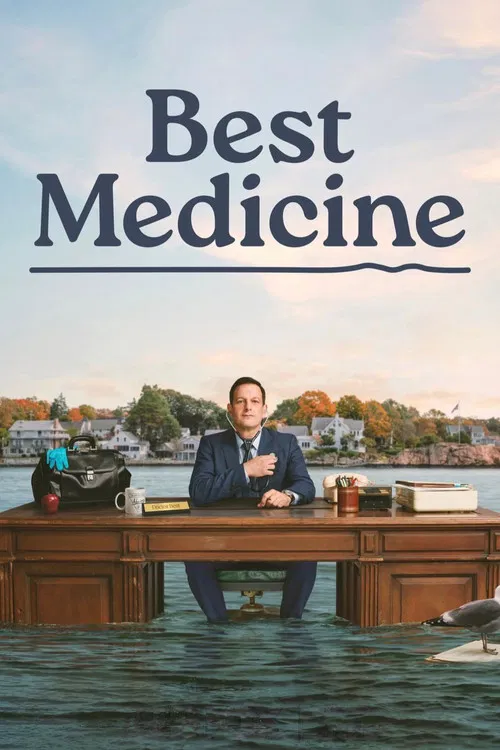
The Bedside Manner of a PorcupineThe American television landscape is littered with the corpses of British imports—shows that attempted to translate the dry, cynical wit of the UK into the sunnier, more optimistic vernacular of US network TV, only to lose their souls in transit. It is with a palpable sense of relief, then, that one approaches FOX’s *Best Medicine*, a reimagining of the beloved *Doc Martin*. Rather than sanding down the edges of its prickly protagonist, this adaptation leans into the abrasive, creating a character study that is less about a "grumpy doctor" and more about a man frantically erecting walls to hide his own shattering vulnerability.

The series introduces us to Dr. Martin Best (Josh Charles), a top-tier Boston surgeon forced into exile not by administrative failure, but by a sudden, humiliating onset of hemophobia—a crippling fear of blood. He lands in Port Wenn, Maine, a fictional fishing village that serves as the show’s visual and thematic anchor. The direction here is smart to avoid the hyper-saturated gloss of typical Hallmark towns. The Port Wenn of *Best Medicine* is windswept and saline; you can almost smell the low tide and the lobster bait. It is a setting that feels indifferent to human comfort, mirroring Martin’s own internal landscape.
Josh Charles is an inspired choice for the titular role. Where Martin Clunes (the original Doc) played the character with a rigid, almost slapstick stiffness, Charles brings a coiled, neurotic energy reminiscent of his work in *The Good Wife*, but stripped of the charm. His Martin Best is a man in a state of constant, low-level panic. When he abruptly leans in to examine the eyes of local teacher Louisa Gavin (Abigail Spencer) in the pilot—a "meet-cute" that is actually a "meet-offensive"—it isn’t played for easy laughs. It plays as a desperate attempt by a man who only understands the world through diagnosis to assert control over a social interaction he is failing to navigate.
The central tension of the series lies in this dichotomy: Martin is a healer who cannot stand to be touched. The script treats his blood phobia not merely as a plot device to get him to Maine, but as a genuine psychological wound. In the moments where the phobia strikes—leaving him clammy, shaking, and staring at the floor—the show dips into a surprising melancholy. He is a man robbed of his vocation, forced to treat ingrown toenails when he should be repairing hearts. The "quirky locals," often the death knell of subtle storytelling, serve here as a chaotic Greek chorus that refuses to let him wallow in that tragedy.
Ultimately, *Best Medicine* succeeds because it refuses to cure its protagonist too quickly. In a television era obsessed with "likability," Martin Best remains steadfastly difficult. He is the sand in the oyster of Port Wenn. The show suggests that community isn't built on politeness, but on the messy, uncomfortable necessity of needing one another. It is a comedy, yes, but one that understands that the best medicine often tastes bitter on the way down.