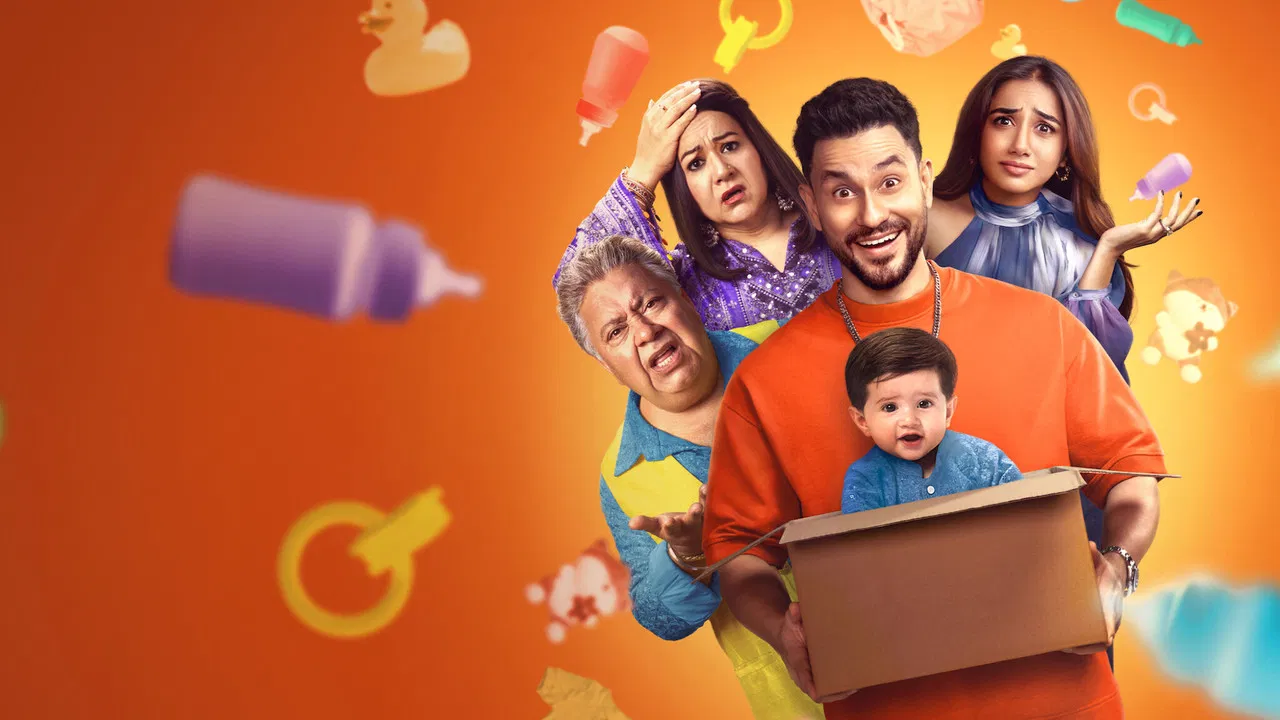
The Father, The Son, and The Holy ChaosIn the landscape of modern Indian streaming, where gritty crime thrillers and dark sociological dramas often suffocate the algorithm, *Single Papa* arrives like a burst of unexpected, if slightly chaotic, sunshine. Showrunner Shashank Khaitan, returning to the "Dharma-esque" roots of gloss and emotion he cultivated in films like *Humpty Sharma Ki Dulhania*, here attempts something riskier: a deconstruction of the North Indian man-child that doesn't just mock him, but asks him to grow up. The result is a series that, while occasionally stumbling over its own sitcom tropes, manages to locate a profound tenderness in the terrifying geography of fatherhood.
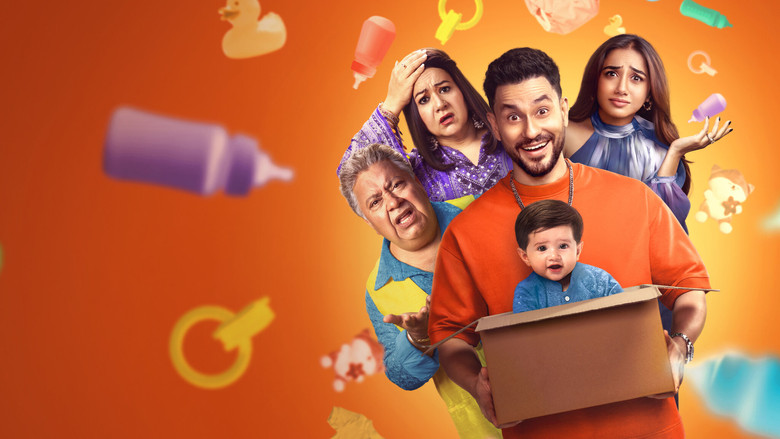
The visual language of the series is deceptively bright. The Gehlot household in Gurugram is filmed with high-key lighting and vibrant colors, initially suggesting a standard-issue dysfunctional family comedy. However, the directors—Khaitan, along with Hitesh Kewalya and Neeraj Udhwani—use this polished aesthetic to mask a deeper rot. Gaurav "GG" Gehlot (Kunal Khemu) lives in a bubble of arrested development, a world where his underwear is managed by his mother and his finances by his father. When he discovers an abandoned baby in the back of his car (inside an Amul carton, no less), the camera shifts its gaze. The framing moves from wide, chaotic family tableaus to tight, intimate close-ups of Gaurav and the child. In these quiet moments, the "content" fades away, leaving us with the terrifying, silent intimacy of a man realizing he is responsible for another life.
At the center of this storm is Kunal Khemu, an actor who has long deserved a vehicle that utilizes his unique blend of comic timing and soulful vulnerability. As GG, he navigates a treacherous path. It would be easy to play Gaurav as a caricature of the entitled Delhi brat. Instead, Khemu infuses him with a desperate, almost frantic desire to love. The scene where he confronts the adoption agency head, played with icy precision by Neha Dhupia, is not just a plot point about bureaucracy; it is a primal scream against a society that views maternal instinct as biological and paternal instinct as suspect.

The series is not without its flaws. The script occasionally relies on convenient contrivances—the "baby in the car" incited incident requires a suspension of disbelief that borders on the fantastical. Yet, the emotional truth holds firm, largely due to the unexpected subversion of masculinity provided by the supporting cast. The standout is Dayanand Shetty (parodying his tough-guy persona from *CID*) as Parvat Singh, the "Manny" (male nanny). His character argues that caregiving is gender-agnostic, providing a physical counterpoint to Gaurav’s emotional journey.
Ultimately, *Single Papa* succeeds because it refuses to be cynical about love. In an era where "family values" are often politicized or mocked, this series suggests that family is not defined by blood or marriage, but by the sheer, stubborn will to show up. It posits that the transition from "man-child" to "father" isn't about losing one's sense of fun, but about finding a purpose that is heavier, and far more rewarding, than oneself. It is a flawed, funny, and deeply human argument for the transformative power of a diaper change.