✦ AI-generated review
The Extraordinary Weight of the Ordinary
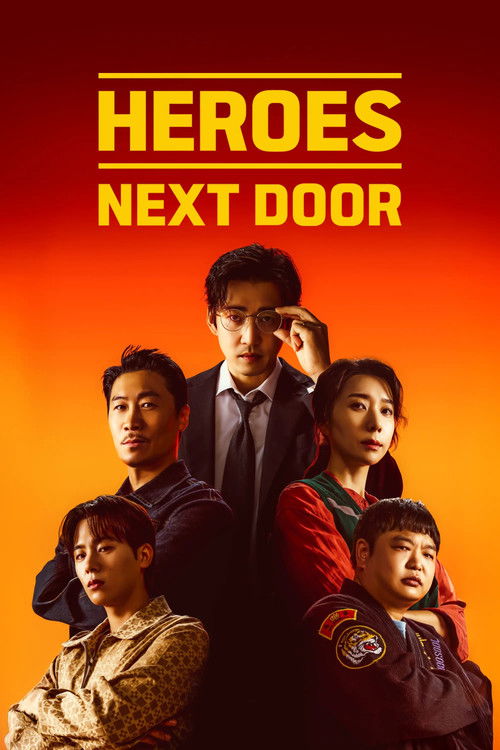
In an era of cinema suffocated by the "multiverse" stakes of saving the entire cosmos, there is something profoundly radical about a story that dares to care only about a single city block. *Heroes Next Door* (2025), directed by Cho Woong, arrives not as a thunderous blockbuster, but as a warm, rugged handshake. It is a series that understands a fundamental truth often lost in the noise of modern action franchises: the most terrifying threat isn't an alien invasion, but a bomb ticking in the police station down the street where your children walk to school.
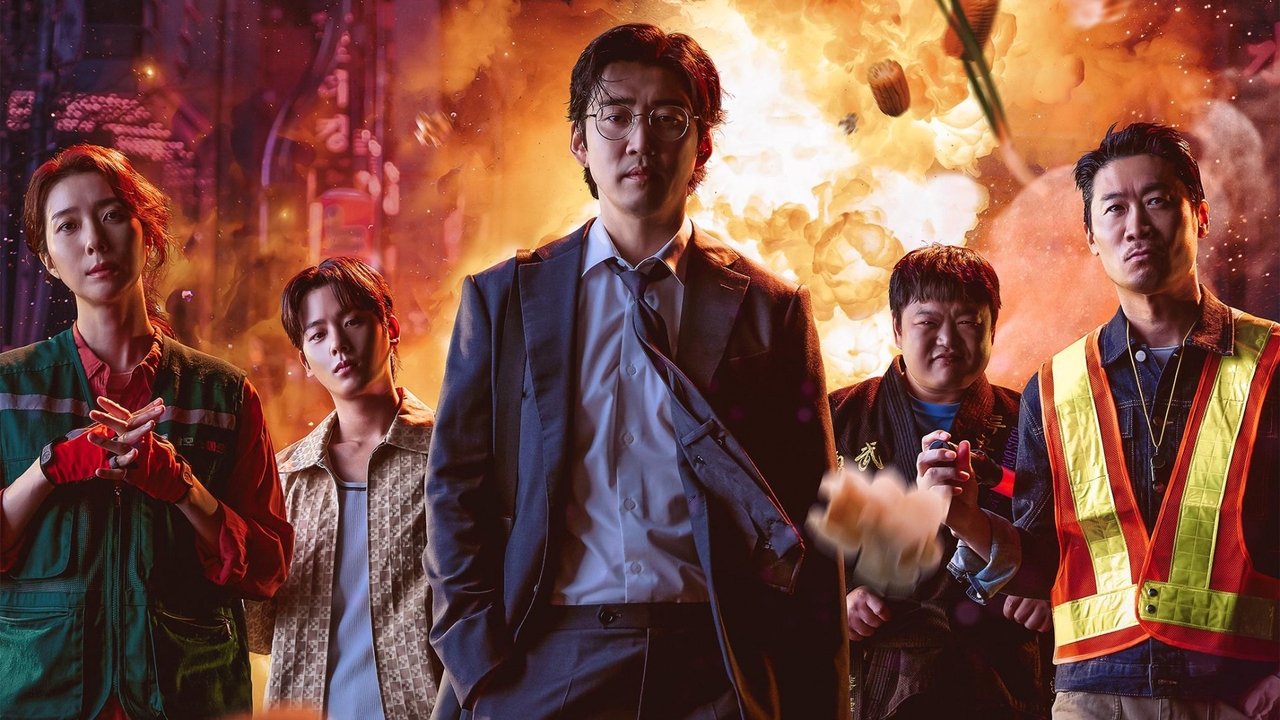
The central discourse surrounding the series has inevitably, and understandably, fixated on the "reunion." To see Yoon Kye-sang and Jin Sun-kyu share a frame is to witness a delightful exorcism of their past. Eight years ago, in *The Outlaws*, they were the embodiment of nihilistic violence—Jang Chen and Wi Sung-lac, figures of pure menace. Here, Cho Woong flips that coin with a smirk. As Choi Kang and Kwak Byung-nam, they are no longer predators but protectors, swapping machetes for barcode scanners and trash bags. Yet, to view this merely as an "actor reunion" is to miss the show’s deeper emotional resonance. This isn't just fan service; it is a rehabilitation of the masculine archetype, moving from destruction to preservation.
Director Cho Woong, whose previous work like *A Virtuous Business* demonstrated a keen eye for the quiet dignity of community life, eschews the glossy, high-contrast aesthetics of typical espionage thrillers. Instead, his lens is textured and tactile. The action does not take place in sterile situation rooms but in hardware stores and grocery aisles. The visual language is defined by the juxtaposition of the lethal and the domestic. There is a specific, widely discussed image that perfectly encapsulates the show’s ethos: Choi Kang pulling a firearm not from a tactical holster, but from a plastic grocery bag brimming with green onions. It is a visual metaphor that lands with the weight of a manifesto—violence here is an intrusion on the sanctity of daily life, an unwanted guest at the dinner table.
At its heart, *Heroes Next Door* is a study of dormant purpose. The narrative tension doesn't stem from "will they save the world?" but "can they save this neighborhood without blowing their cover?" The script brilliantly uses the mundane to ground the stakes. When Kwak Byung-nam suspects Choi Kang, it isn't because of a slip in tradecraft, but because Kang fails to separate his recyclables correctly. It’s a comedic beat, yes, but it underscores the film’s humanistic core: these are men defined not by their kill counts, but by their civic duties. The chemistry between Yoon and Jin—often described by fans as "sotteok sotteok" (a perfect pairing of sausage and rice cake)—carries the show through its occasional pacing stumbles. Their camaraderie feels lived-in, a silent pact between veterans who know that the only thing harder than war is peace.
The series is not without its flaws; at times, the oscillation between slapstick comedy and genuine peril can feel jarring, threatening to capsize the narrative tone. However, it recovers its balance in the finale. When Kim Su Il makes the choice to drive the bomb away from the populous center, the series sheds its comedic skin to reveal a raw, beating heart. It is a moment of quiet sacrifice that elevates the show from a buddy comedy to a genuine tribute to the unseen guardians of our communities.
Ultimately, *Heroes Next Door* triumphs because it rejects the abstract for the concrete. It suggests that heroism is not about having a superpower, but about having a neighbor you are willing to bleed for. In a year of cinematic giants, this small, scrappy story about a hardware store owner and an insurance agent stands tall, reminding us that sometimes, the most important world to save is the one right outside your front door.