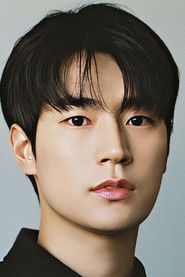
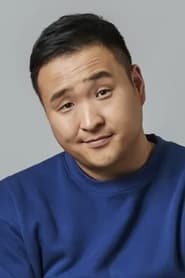
The Gravity of GriefIn the vast, saturated galaxy of Korean television, the "forced cohabitation" trope is a celestial body we have orbited a thousand times. Usually, the gravitational pull that brings two attractive leads together is trivial—a contract dispute, a real estate mix-up, or a drunken mistake. But *Our Universe* (2026), directed with melancholic elegance by Lee Hyun-seok, dares to replace these flimsy plot devices with a black hole: sudden, irrevocable death. By anchoring a romantic comedy in the dual funerals of the protagonists' siblings, the series immediately transcends its genre trappings, asking not just "Will they kiss?" but "Can they survive?"
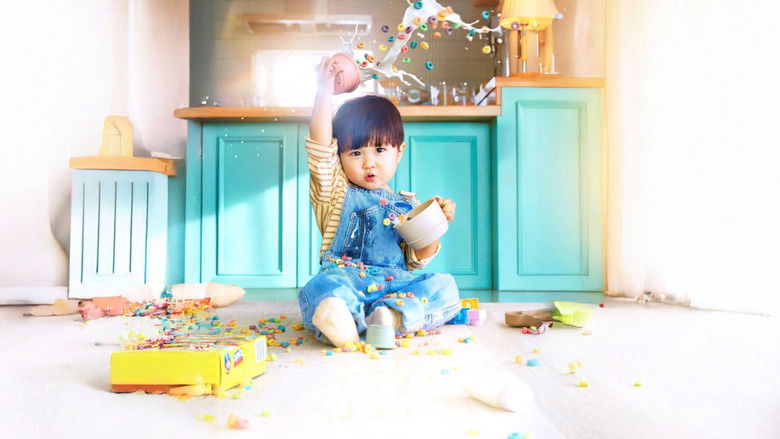
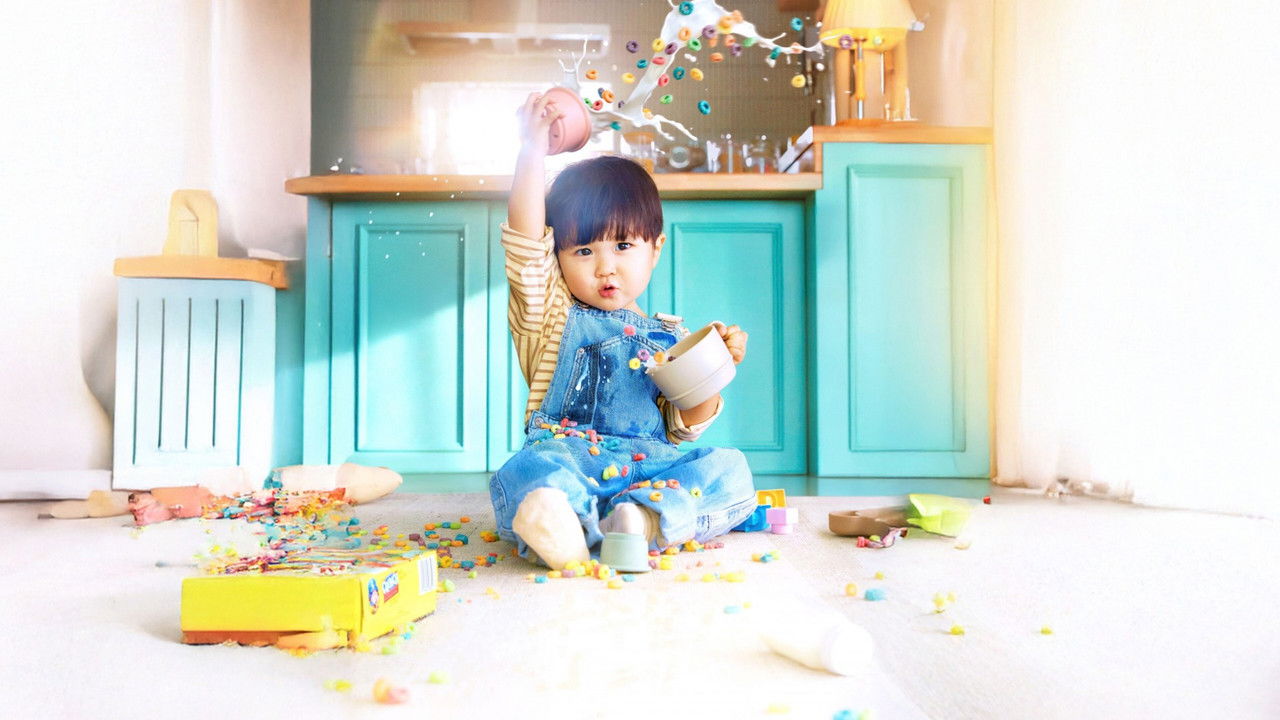
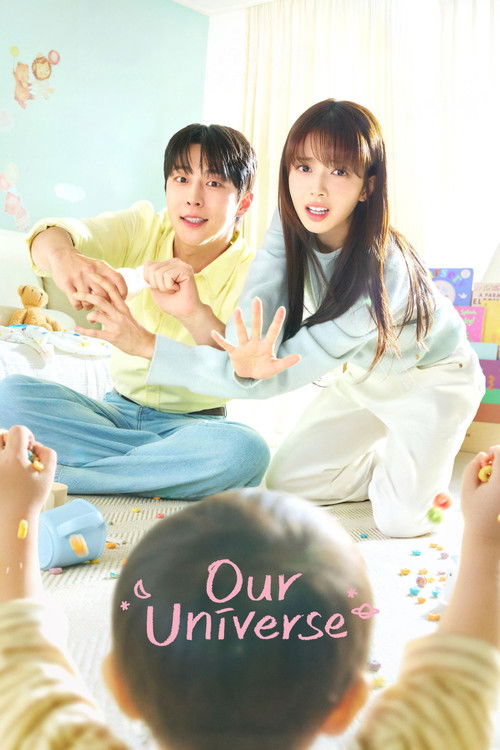
Lee Hyun-seok, who previously demonstrated a keen eye for courtly isolation in *The King’s Affection*, here trades the palace for the modern apartment, yet the sense of suffocation remains. The visual language of *Our Universe* is built on a stark dichotomy. We are introduced to Sun Tae-hyung (Bae In-hyuk) through the lens of his camera—his world is one of shutter speeds, controlled lighting, and silence. He is a man who curates reality to keep it at a safe distance. In contrast, the arrival of his orphaned nephew, Woo-joo (literally "Universe"), shatters this curated stillness. Lee films the domestic chaos not with the bright, flat lighting of a sitcom, but with a handheld intimacy that captures the exhausting, claustrophobic reality of grief-stricken parenting. The clutter of toys isn't just "mess"; it is the debris of a life explosion.
The script’s brilliance lies in how it navigates the "in-law" dynamic. In most dramas, in-laws are peripheral annoyances. Here, Tae-hyung and Woo Hyun-jin (Roh Jeong-eui) are bound by a link that has been severed. They are "family" only because of people who no longer exist. This creates a fascinating tension in their early interactions, particularly the widely discussed "marketplace" scene. What plays out on the surface as a comedic misunderstanding over a secondhand transaction is, upon closer inspection, a clash of survival mechanisms: Hyun-jin’s desperate frugality versus Tae-hyung’s detached aestheticism. They are two planets spinning in opposite directions, forced into the same orbit by a dying star.
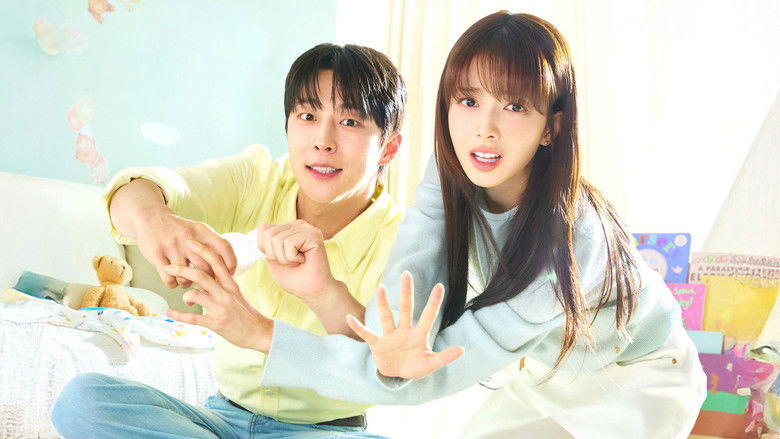
Bae In-hyuk delivers a performance of remarkable restraint. It is easy to play "prickly," but far harder to play a man terrified that loving anything else will lead to more loss. His silence is loud. Countering him, Roh Jeong-eui sheds the polished veneer of her previous roles to embody a frantic, frayed protectiveness. She is the engine of the show, driven by a guilt that she—the younger, less established sister—was the one left behind. When the romance inevitably begins to bloom, it does not feel like a triumph of lust, but a surrender to solace. They do not fall in love because they are destined; they fall in love because they are the only two people on earth who speak the same language of pain.
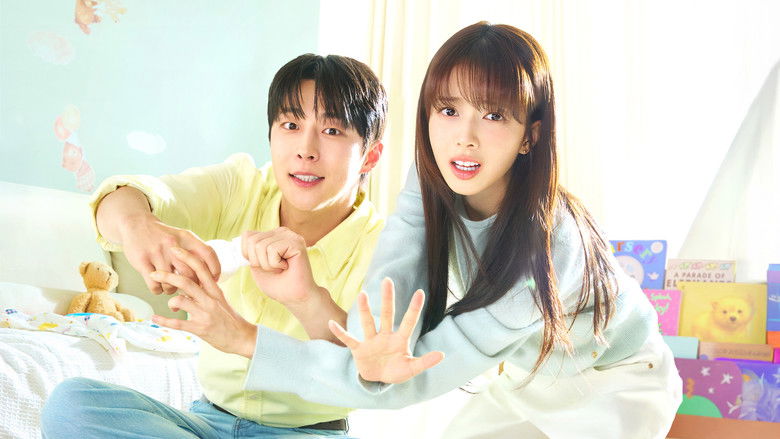
Ultimately, *Our Universe* is a misnomer. It suggests vastness, but the show is intimately, painfully small. It is about the universe shrinking down to the size of a living room, a crying toddler, and two strangers realizing that the empty space left by death can only be filled by the messy, inconvenient presence of the living. It is a series that suggests we do not move on from grief; we simply expand our orbit to include it. In a landscape of disposable content, this is a drama that demands—and earns—our emotional gravity.