✦ AI-generated review
The Currency of Intimacy
In the polished, neon-lit corridors of modern Taipei, love is rarely just an emotion; it is an asset, a liability, or a desperate negotiation. Hsu Fu-chun’s *Adrift in Love* (2025) arrives not as a typical romance, but as a forensic accounting of the human heart. Adapted from Hou Wen-yong’s literary examination of desire, the series strips away the soft-focus nostalgia often associated with Taiwanese dramas, replacing it with a bruising, frantic realism. Here, relationships are not destiny—they are transactions that have gone terribly wrong.
Hsu, a director who previously navigated the treacherous waters of marital infidelity in *The Fierce Wife*, refines his visual language here. The camera in *Adrift in Love* often feels voyeuristic, lingering too long in the sterile whites of a psychiatrist’s office or the suffocating luxury of a high-rise apartment. There is a specific, clinical coldness to the way the series is lit, suggesting that the characters are specimens in a jar, struggling for oxygen. Even the romantic beats are undercut by a sound design that emphasizes silence and unease over swelling orchestral cues. The world looks expensive, yet it feels spiritually bankrupt—a perfect mirror for the protagonist, Zhou Xiao Qi.
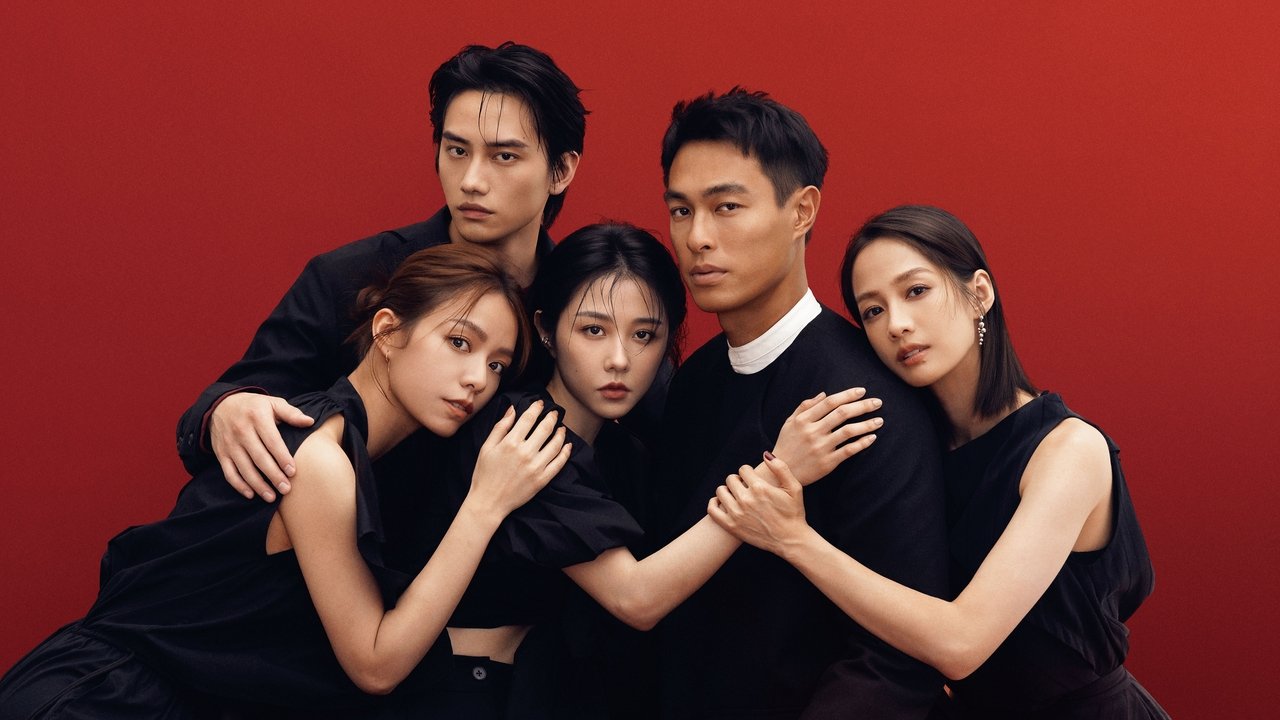
Played with a brittle, terrifying vulnerability by Ivy Shao, Xiao Qi is the series' dark gravitational center. Her worldview—that affection is a resource to be monetized—challenges the audience's empathy. It would be easy to dismiss her as a villain, but Shao plays her as a survivalist in a capitalist emotional landscape. Her entanglement with the psychiatrist Gu Hou Ze (Tony Yang) is less a love affair and more a collision of two drowning people. Yang, usually known for his charismatic warmth, here delivers a performance of implosive guilt. The therapy scenes, which should offer clarity, instead become battlegrounds where power dynamics shift with a single glance.
The narrative counterweight is provided by Vivian Sung’s Pan Xin Tong, whose storyline offers a more traditional romantic struggle but is no less punishing. If Xiao Qi is the cynic, Xin Tong is the exhausted optimist, and the series brutally tests whether hope is a sustainable resource in a world built on cynicism. The genius of the script lies in how these parallel stories do not merely coexist but infect one another. The "conversation" surrounding the show has rightly focused on its refusal to offer moral absolutes; the characters are neither fully condemned nor fully redeemed.
Nowhere is this clearer than in the widely discussed cliffside confrontation between Xiao Qi and Fan Yue Jiao (Jian Man-shu). In a lesser drama, this would be a moment of screeching melodrama. Under Hsu’s direction, it becomes a quiet, terrifying standoff about the cost of sanity. It is a scene that encapsulates the series' thesis: we are all drifting, untethered, grasping at whoever is closest to keep from going under.
*Adrift in Love* is a demanding watch. It rejects the escapism of the "idol drama" genre in favor of a mature, often uncomfortable mirror held up to modern loneliness. It suggests that while love might not be enough to save us, the transaction is still the only thing keeping us alive.