The Shadow of the SunThere is a peculiar ghostliness to *River Sunset*, a series that arrives on our screens in 2026 carrying the distinct, dusty atmosphere of a project unearthed from a time capsule. Filmed nearly eight years ago, this World War II espionage drama—starring the mercurial Zhang Luyi and the poised Ning Chang—bears the scars of its long hibernation. Yet, rather than feeling dated, this delay has inadvertently gifted the production a sense of weariness that suits its subject matter perfectly. This is not a war story of glistening medals and patriotic shouting; it is a story about the corrosive silence of waiting, filmed in a way that makes the tropical heat feel like a suffocating blanket.
The premise locates itself in the gray zones of history, specifically the prelude to the Doolittle Raid. When an Allied plane carrying top-secret plans crashes onto a Japanese-occupied island, the narrative mechanism clicks into place: Wumu Yilang (Zhang Luyi), a sleeper agent deep under cover as a Japanese local, is reactivated. He is paired with Ye Biying (Ning Chang) to retrieve the intelligence before it vanishes.

Director Zhao Yilong, working with a visually ambitious palette, eschews the sepia-toned nostalgia often found in period dramas. Instead, *River Sunset* is bathed in high-contrast shadows and sickly, humid greens. The island setting functions less like a geographical location and more like a psychological "sea prison." The camera lingers on the sweat on a collar or the twitch of a hand, emphasizing that in the world of espionage, the loudest battles are fought internally. The cinematography captures the isolation of the spy—the crushing reality that to save your country, you must effectively cease to be yourself.
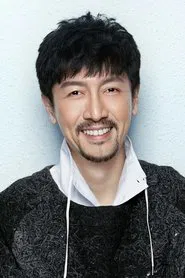
At the center of this web is Zhang Luyi. He is an actor who specializes in the architecture of repression. Unlike the bombastic heroes of typical war epics, Zhang’s Wumu Yilang is a study in subtraction. He does not act; he reacts, absorbing the suspicion of his enemies with a terrifying stillness. There is a specific scene early in the series, a dinner sequence where his cover is probed by a Japanese officer, where Zhang does more with a measured sip of sake than most actors do with a monologue. He creates a character who is visibly eroding from the inside out, maintaining a Japanese persona so perfect it threatens to consume his true identity.

However, the series is not without its dissonant notes, largely stemming from its ambitious but occasionally awkward international scope. The inclusion of Casper Van Dien as Jimmy Doolittle is a fascinating, if jarring, casting choice—a pulp b-movie icon dropped into a somber Asian prestige drama. These scenes sometimes struggle to mesh tonally with the suffocating tension of the main plot, creating a fissure between the "Hollywood" war movie occurring in the sky and the noir thriller happening on the ground.
Furthermore, modern viewers might find an accidental treasure in the supporting cast. Zhang Songwen, who plays Director Shen, filmed this role long before his explosion to stardom in *The Knockout*. Watching him here is like seeing a master practicing his scales before the symphony; his performance is sharp, detailed, and undeniably magnetic, stealing scenes even from the margins.
Ultimately, *River Sunset* overcomes its troubled production history to offer something more substantial than a standard thriller. It is a meditation on the cost of wearing a mask. While it occasionally stumbles under the weight of its melodramatic subplots, it succeeds where it matters most: in portraying the lonely, quiet heroism of those who live in the dark so that others may see the dawn. It is a flawed, fascinating artifact—a sunset that took a decade to finally fade.