✦ AI-generated review
The Cathedral of the Unanswered
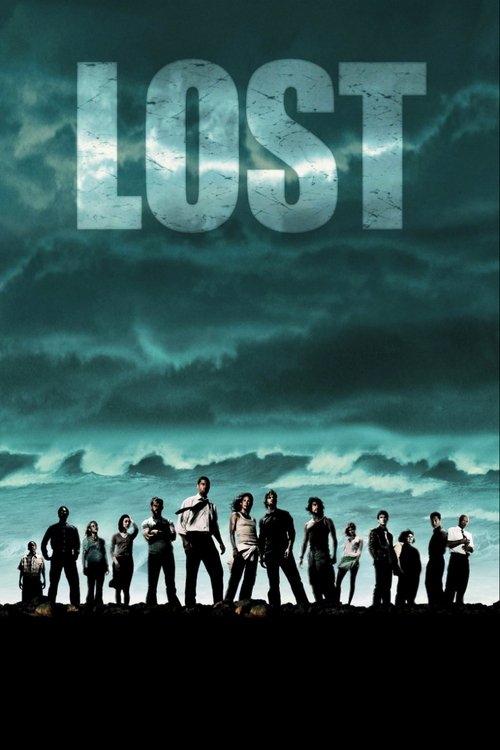
When *Lost* premiered in 2004, it did not merely arrive on television; it colonized the collective consciousness. For six seasons, the show transformed viewership from a passive leisure activity into a forensic obsession, birthing the modern era of "watercooler" TV where forums buzzed with deconstructions of polar bears, hatch numbers, and smoke monsters. Yet, two decades later, to view *Lost* simply as a puzzle box—a distinct narrative product to be solved—is to fundamentally misunderstand its enduring power. Beneath its labyrinthine mythology lies a far more fragile, human project: a sprawling, chaotic cathedral dedicated to the trauma of being alive.
The visual language of the series, established in J.J. Abrams’ seminal pilot, immediately signals that this is not a survival procedural. It begins not with the crash, but with an eye—specifically, the eye of Dr. Jack Shephard—snapping open in a bamboo forest. This motif of the opening eye becomes the show’s defining visual thesis: an awakening from the sleepwalking of modern existence into a hyper-real nightmare. The camera work, often handheld and claustrophobic within the jungle’s lush, suffocating greenery, contrasts violently with the pristine, blinding horizons of the beach. The island is shot less as a location and more as a sentient entity, a purgatorial stage where the landscape itself seems to be conspiring against the characters’ sanity.
However, the show’s structural genius lay in its temporal dislocation. By utilizing flashbacks (and later, flash-forwards and the ethereal "flash-sideways"), showrunners Damon Lindelof and Carlton Cuse stripped the "disaster movie" genre of its anonymity. We are not watching victims; we are watching a collection of broken histories. The title *Lost* was never geographical. It was existential. Every survivor—from the fugitive Kate Austen to the conman Sawyer—was spiritually adrift long before Oceanic Flight 815 fell from the sky.
The heart of the series pulses most vibrantly in its philosophical duel between Jack Shephard, the Man of Science, and John Locke, the Man of Faith. Their conflict frames the narrative’s central question: Is our suffering random chaos, or does it possess design? Nowhere is this synthesis of high-concept sci-fi and raw emotion better realized than in the Season 4 masterpiece, "The Constant." In this episode, the narrative mechanics of time travel are not used for spectacle, but to dramatize the stabilizing force of love. Desmond Hume’s desperate telephone call to Penny Widmore across decades remains one of television’s most transcendent moments because it anchors the show’s wildest metaphysical swings to a simple, devastating human need: connection.
The series' legacy is frequently marred by the discourse surrounding its finale, a polarizing conclusion that infuriated those who demanded a logical index of answers. But *Lost* was never a math equation; it was a character study. The writers prioritized emotional closure over encyclopedic resolution. The ending, in its spiritual earnestness, posits that the people we love are the only "answer" that survives death.
In an era of algorithm-driven storytelling, *Lost* stands as a monument to messy, ambitious, unparalleled creativity. It faltered under its own weight at times, but it dared to suggest that the mystery of the universe is less interesting than the mystery of the person sitting next to you. It remains a flawed, beautiful masterpiece that demands we open our eyes.