✦ AI-generated review
The Architecture of Comfort
In the volatile landscape of twenty-first-century television, where anti-heroes reign and narratives fracture into complex puzzles, *NCIS* stands as a monolith of stability. Dismissed by high-brow critics as mere "Dad TV" or procedural "comfort food," the series is actually a fascinating study in narrative endurance. It does not challenge the viewer with moral ambiguity; rather, it offers a sophisticated, rhythmic reassurance that order can, and will, be restored. To view *NCIS* simply as a crime show is to miss its true function: it is a workplace fantasy of competence, loyalty, and the enduring power of the found family.
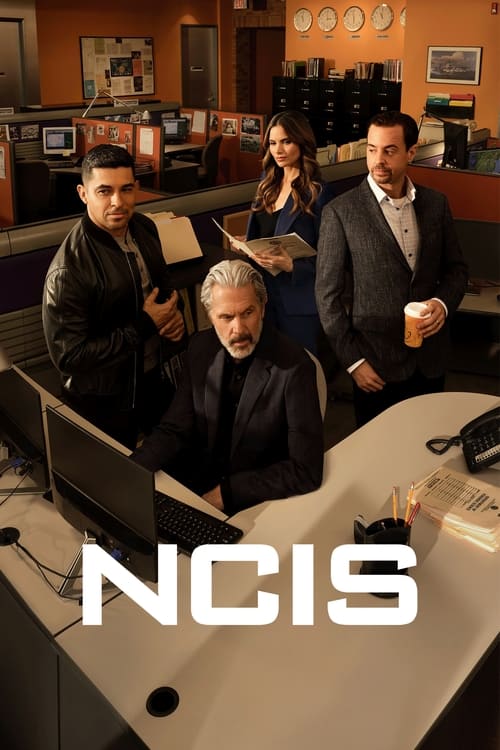
Visually, the series established a lexicon that has become almost hypnotic over its two-decade run. The most distinct flourish is the "phloof"—the onomatopoeic term fans use for the black-and-white freeze-frame that marks the transition between acts, accompanied by a camera shutter sound. This device is not merely stylistic; it serves as a punctuation mark, a breath that separates the chaos of the investigation from the inevitability of the solution. The show’s aesthetic—the warm, amber-hued lighting of the squad room contrasted with the cool, sterile blues of the forensic lab—creates a binary world. The squad room is the hearth, the family dinner table where the "kids" (DiNozzo, McGee, Ziva, Bishop, Torres) squabble under the watchful eye of the patriarch, while the lab is the realm of objective truth.
At the heart of this machine for nearly two decades was Leroy Jethro Gibbs (Mark Harmon). Gibbs was not just a lead character; he was a gravitational force. A man of few words, functional mute by modern TV standards, he represented a specific American archetype: the stoic, damaged protector. The show’s most famous recurring motif—the "head slap" Gibbs would deliver to the back of a subordinate’s head—was a controversial but defining gesture. It was a physical manifestation of his tough love, a correction that said, "Focus." The elevator scenes, where Gibbs would hit the emergency stop to force a private conversation, became the show’s confessional booth. In these suspended moments, the hierarchy dissolved, and the emotional truth of the characters was allowed to breathe before the doors opened and the procedural armor was re-equipped.
However, the genius of *NCIS* lies in its elasticity. It survived the departure of key cast members—the shocking execution of Kate Todd, the exit of the beloved Ziva David, and eventually, the retirement of Gibbs himself—because the show is less about the individuals and more about the dynamic they inhabit. The series posits that institutions are only as good as the people inside them. In an era of profound distrust in government and authority, *NCIS* offers a seductive counter-narrative: here is a federal agency where the agents are incorruptible, the science is irrefutable, and the bad guys are always caught within the hour.
Ultimately, *NCIS* succeeds not because of its mysteries, which are often secondary to the banter, but because of its consistency. It acts as a cultural metronome. The agents may change, the technology may upgrade, but the rhythm remains. It is a show about the quiet dignity of doing one's job and the profound safety found in a team that refuses to leave a man behind. In a chaotic world, *NCIS* offers the rarest commodity of all: a guaranteed resolution.