✦ AI-generated review
The Abyss Gazes Back
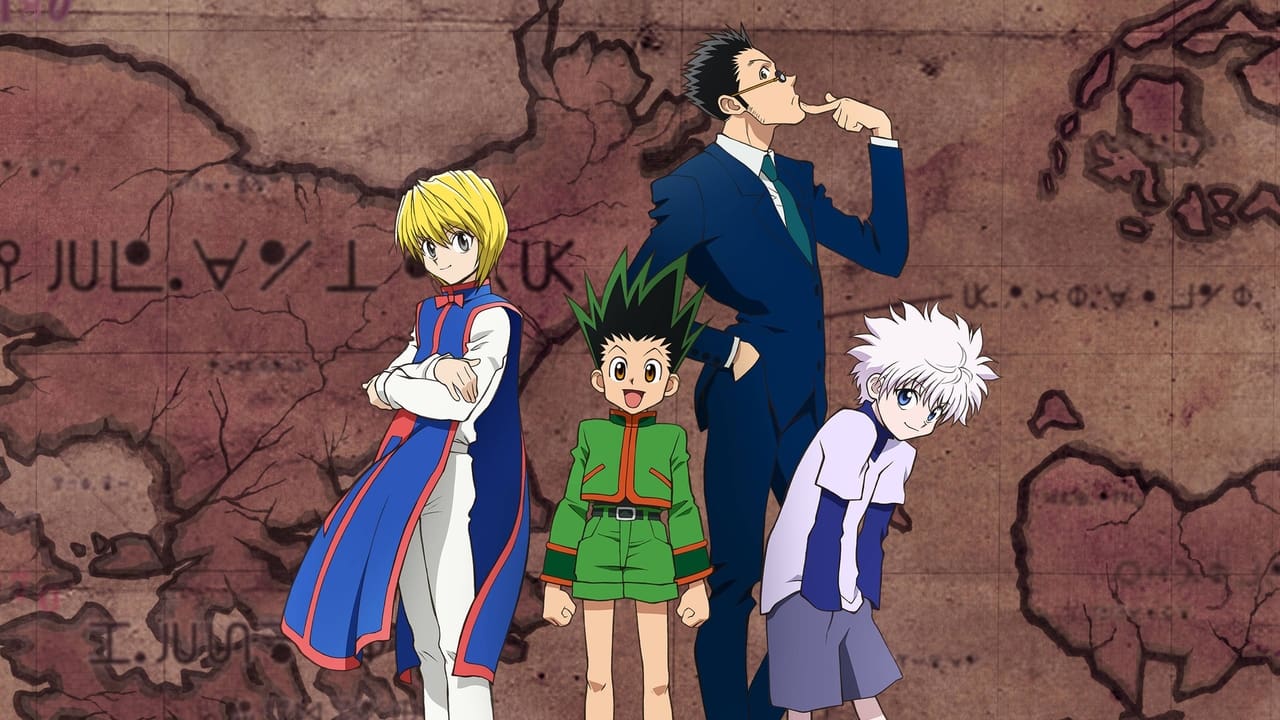
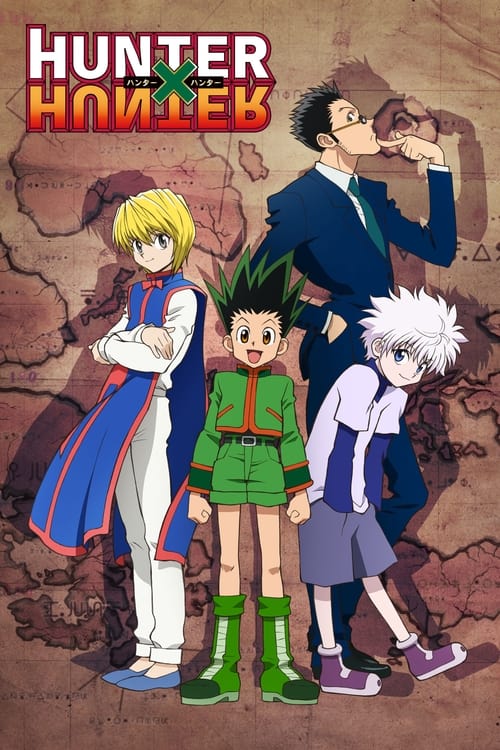
At first glance, *Hunter x Hunter* (2011) appears to be a masquerade. With its vibrant color palette, spiky-haired protagonist, and fantastical creatures, it wears the costume of a standard "shonen" adventure—a genre typically defined by the comfortable rhythms of escalating power levels and the triumph of friendship. But to view Hiroshi Kōjina’s adaptation through this lens is to fall for a meticulously crafted trap. This series, produced by the legendary studio Madhouse, is not a celebration of the hero’s journey; it is a deconstruction of the very will to power that drives it.
The brilliance of the 2011 adaptation lies in its visual deceit. Madhouse, known for technical precision, initially presents a world of pristine, almost candy-colored clarity. The early arcs, particularly the "Hunter Exam," move with a buoyant, kinetic energy that suggests a traditional romp. Yet, this clean aesthetic becomes a chilling counterpoint as the narrative descends into psychological horror. When the violence eventually erupts—sudden, brutal, and often senseless—it feels all the more violation because the world looked so innocent just moments before. The animation does not darken to warn us; it remains terrifyingly bright, allowing the horror to unfold in the stark light of day.
Nowhere is this subversion more potent than in the celebrated "Chimera Ant" arc, a sprawling narrative achievement that shifts the series from an adventure story to a philosophical treatise on war, evolution, and xenophobia. Here, the show makes a daring stylistic choice: the introduction of an omniscient narrator. While some critics initially balked at this literary device, it serves a crucial function. It detaches us from the immediate action, forcing us to view the characters not as heroes and villains, but as biological specimens reacting to extreme trauma. The narrator’s clinical detachment underscores the arc’s central thesis: in the grand scheme of evolution, human morality is just another survival mechanism.
The heart of this tragedy beats in the inverted parallels between the protagonist, Gon Freecss, and the antagonist, Meruem. In most stories, the hero ascends toward enlightenment while the villain descends into depravity. *Hunter x Hunter* reverses this polarity with devastating precision. Meruem, the King of the Ants, begins as a creature of pure instinct and violence but slowly ascends toward humanity through his relationship with Komugi, a fragile, blind girl who challenges him over a board game. Their final moments together—played out in a pitch-black screen, illuminated only by dialogue—remain one of the most poignant scenes in modern animation, proving that love can bloom even in the absence of light.
Conversely, Gon’s trajectory is a terrifying freefall. His journey is not fueled by altruism, but by a selfish, myopic obsession that ultimately consumes him. The scene of his transformation—silhouetted against a stark white aura—is not a moment of triumph, but a suicide of the self. He sacrifices his future for a moment of destructive power, shedding his humanity to become a monster capable of defeating one.
*Hunter x Hunter* leaves us with an uncomfortable question: What remains of the hunter when the prey has been destroyed? It suggests that the drive to be "the best"—the very engine of the shonen genre—is not a virtue, but a pathology. By the time the credits roll on episode 148, we are left not with the satisfaction of a conqueror, but with the heavy, quiet realization that to hunt monsters is to risk becoming one.