✦ AI-generated review
The Architecture of Eternity
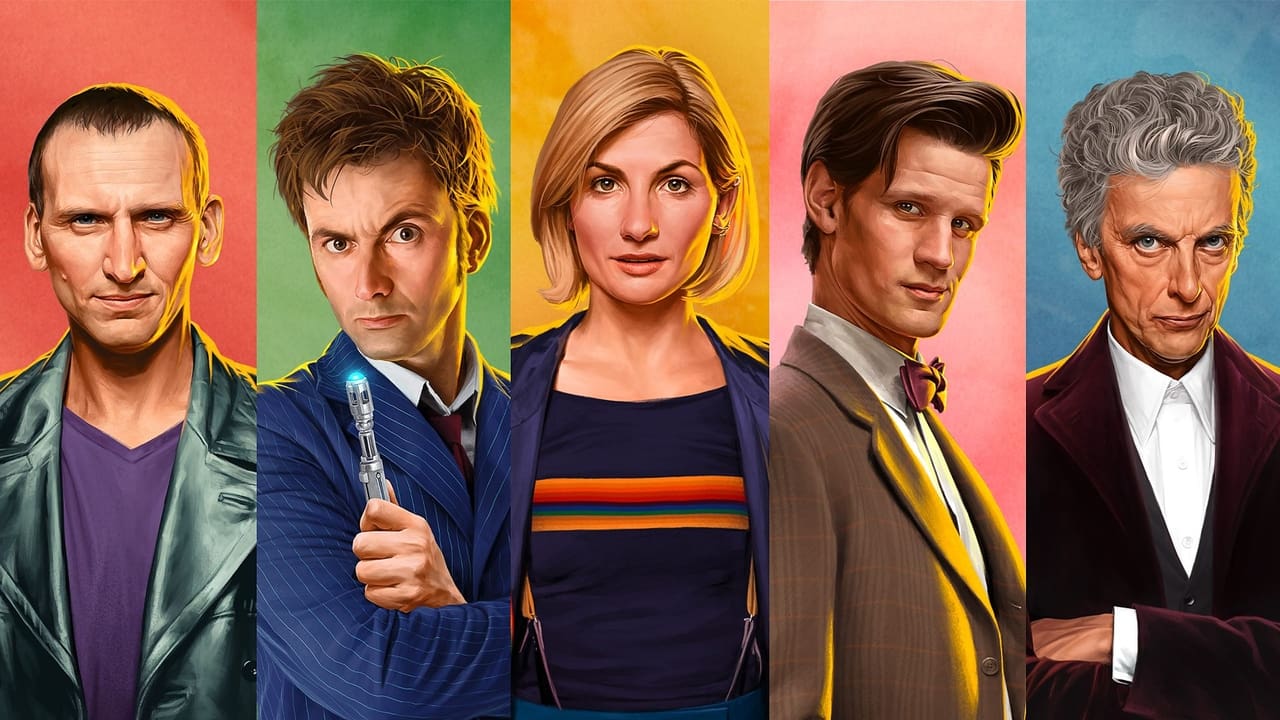
It is the only narrative in television history that has built immortality into its very mechanics. *Doctor Who*, revived in 2005 by Russell T Davies, is not merely a science fiction serial; it is an anthology of the self, a show that survives by ritualistically destroying and rebuilding its own identity. To critique it is to critique a shapeshifter. From the leather-jacketed trauma of Christopher Eccleston (accompanied by Billie Piper’s seminal Rose Tyler) to the frenetic, rainbow-striped hope of Jodie Whittaker, the series poses a singular, melancholy question: If you could live forever, how much of yourself would you lose along the way?
The visual language of the series has undergone a metamorphosis as radical as its protagonist. In its 2005 resurrection, the show was defined by a tangible, industrial grit—London council estates, plastic mannequins, and the claustrophobic interiors of a TARDIS that looked like a biological machine grown from coral. By the time we reach Whittaker’s tenure (the Thirteenth Doctor), the aesthetic shifts toward the cinematic and the ethereal. Under showrunner Chris Chibnall, the lens widens. We are given sweeping vistas of Sheffield and alien planets that gleam with high-definition polish, accompanied by a score that trades orchestral bombast for ambient, synth-heavy atmospheres. Yet, one might argue this visual upgrade occasionally came at the cost of intimacy; the polished sheen sometimes created a distance that the gritty, domestic sweat of the Piper era never suffered from.
At the heart of the recent discourse is Jodie Whittaker’s incarnation—a casting choice that shattered a fifty-year glass ceiling. Whittaker approached the role with a breathlessness that felt like a defense mechanism; her Doctor was a creature of motion, deflecting trauma with rapid-fire optimism and a desperate need for a "fam" (family). However, her era was burdened by the weight of its own mythology. The controversial "Timeless Child" arc, which rewrote the Doctor’s history from a runaway renegade to a victimized demigod, serves as a fascinating, if divisive, case study in narrative consequence. By making the Doctor the "chosen one," the script risked undermining the character’s greatest appeal: that they were simply an idiot with a box and a screwdriver, passing through to help.
The tension in *Doctor Who* often lies between the cosmic and the personal. When the show succeeds, as it did in the quiet devastation of "Demons of the Punjab" or the domestic tragedy of "Father’s Day," it uses time travel not as a plot device, but as a way to expose the fragility of human memory. Whittaker’s Doctor, often criticized for being too passive in her own stories, nonetheless achieved moments of profound grace when the noise stopped. Her final regeneration—a moment of acceptance rather than raging against the dying of the light—highlighted a key truth: this character is a witness to the universe, often powerless to stop the turning of the wheel, but essential because they refuse to look away.
Ultimately, *Doctor Who* endures because it is a tragedy wrapped in an adventure. It is a story about a traveler who loves humanity fiercely but can never truly be one of us. Whether through the lens of Eccleston’s survivor guilt or Whittaker’s hidden sorrows, the show remains a vital, chaotic piece of modern folklore, proving that while faces change, the song remains painfully, beautifully the same.