✦ AI-generated review
The God Who Yawned
In the vast, noisy history of superhero cinema and *shonen* anime, the narrative arc is almost always a vertical line. We watch a protagonist struggle, train, bleed, and eventually ascend to godhood. But what happens after the ascent? What does the god do when there are no more devils left to fear? *One-Punch Man* (2015), particularly under the kinetic direction of Shingo Natsume in its debut season, posits a terrifying answer: The god gets bored. He gets depressed. He worries about missing the Saturday sale at the supermarket.
To view *One-Punch Man* merely as an action-comedy is to miss its profound, melancholic undercurrent. While it presents itself as a satire of the genre—mocking the monologuing villains and the intricate power-scaling of shows like *Dragon Ball Z*—it is, at its core, a character study of existential ennui. Saitama, the titular hero, has achieved the absolute dream of every protagonist before him: he has become invincible. He defeats cosmic horrors with a single, negligent blow. Yet, this victory is his tragedy. The show brilliantly flips the script on the "hero’s journey," turning the attainment of ultimate power into a spiritual dead end.
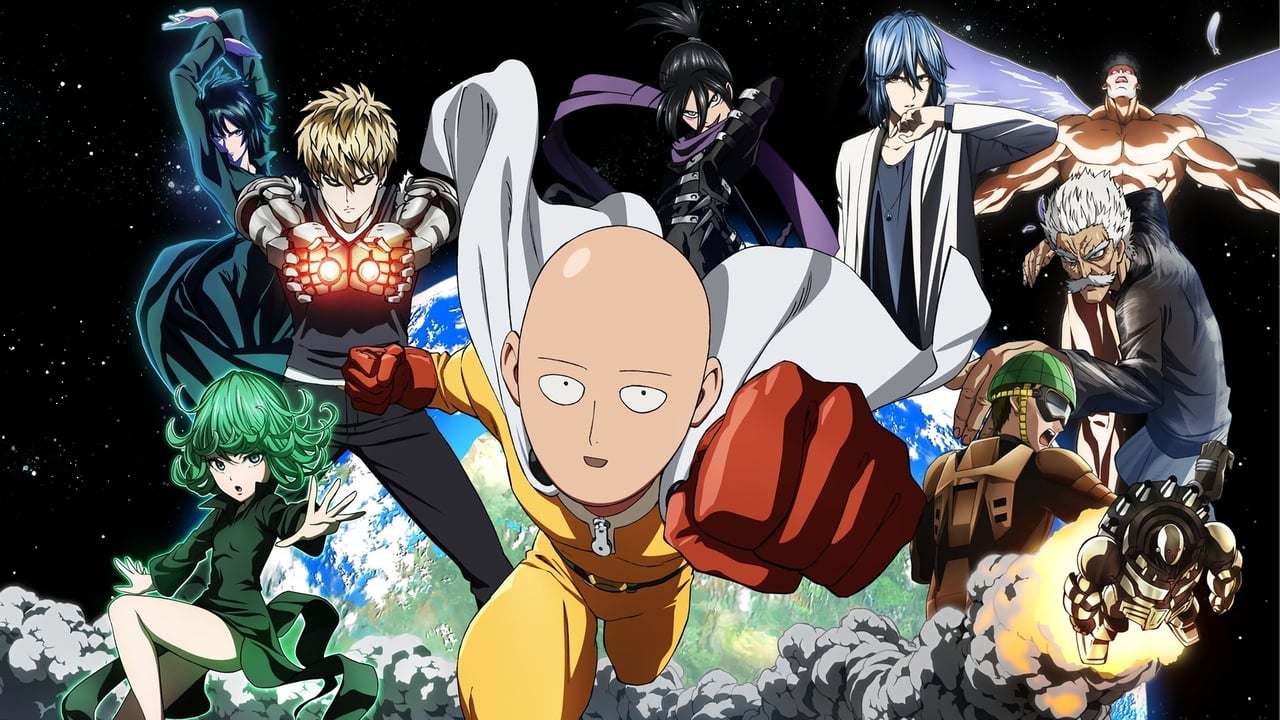
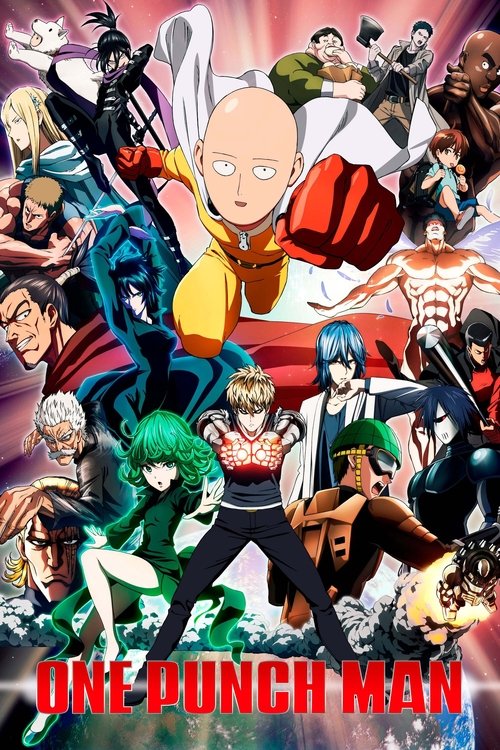
Visually, the series (specifically the Madhouse-produced first season) is a masterclass in dissonance. The animation team utilizes a jarring, deliberate contrast in art styles to tell the story. The world around Saitama is rendered in high-octane, hyper-detailed "sakuga" animation; the villains are grotesque masterpieces of line work, and the cyborg disciple Genos is a symphony of chrome and fire. In the center of this visual cacophony stands Saitama, often drawn as a crude, egg-headed doodle with dead eyes. This is not lazy animation; it is a visual language emphasizing his detachment. He literally does not fit into the high-stakes drama the world is trying to force upon him.
The series finds its emotional anchor not in Saitama’s victories, but in the moments where the definition of heroism is contested. The most poignant scene occurs during the Deep Sea King arc, involving the powerless cyclist Mumen Rider. While the S-Class heroes are defeated despite their arrogance, Mumen Rider stands against a leviathan he knows will kill him. He fights not because he can win, but because he must. It is a moment of pure, unironic heroism that moves the audience to tears, only for Saitama to arrive and resolve the conflict with a pathetic, anti-climactic *thwack*.
By juxtaposing Mumen Rider’s spirit with Saitama’s power, the show asks a difficult question: Is the struggle itself the point of life? Saitama’s dream sequence in the first episode, where he finally feels the rush of a life-or-death battle, is the only time we see him truly alive. When he wakes up, the crushing weight of reality returns. He is a man who has played the game of life, beaten it, and is now forced to stare at the "Game Over" screen while the credits refuse to roll.
*One-Punch Man* is a tragedy wearing the costume of a farce. It suggests that the value of our lives comes not from the destination, but from the friction of the climb. In a modern era obsessed with optimization and "life hacks" to get results faster, Saitama stands as a warning. He is the ultimate winner, yet he is the only one who has lost everything that makes a heart beat faster.