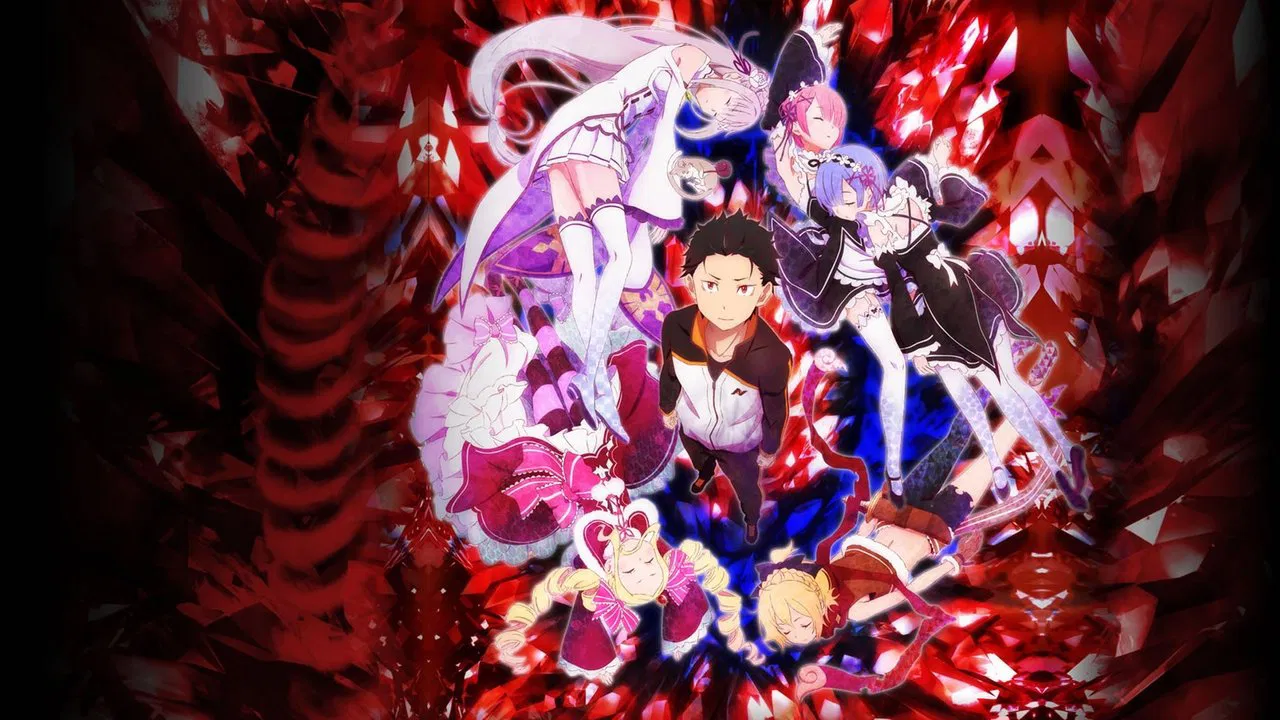
The Agony of the RestartThe modern *isekai* genre is a crowded marketplace of escapism, a vending machine dispensing power fantasies where ordinary teenagers are reborn as demon lords or magical prodigies. In this landscape, *Re:ZERO -Starting Life in Another World-* arrives not as a product, but as a rebuke. It initially feigns the familiar comforts of the genre—the convenience store track suit, the beautiful silver-haired heroine, the medieval fantasy setting—only to violently dismantle them. Directed by Masaharu Watanabe, this is not a story about conquering a new world; it is a grueling meditation on the psychological cost of trying to survive one.
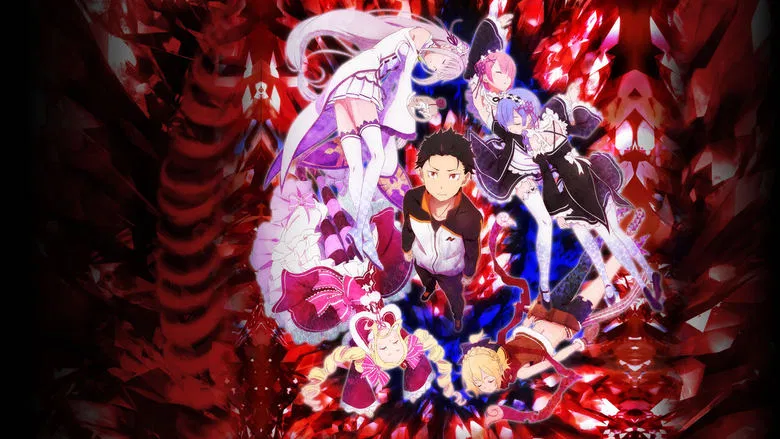
Visually, the series operates with a deceptive brightness. The character designs by Kyuta Sakai possess a soft, round approachability typical of light novel adaptations. Yet, this aesthetic is weaponized against the viewer. When the violence arrives, it is not glorious or stylized; it is jarringly visceral. The direction employs a "sunny horror" technique, where the picturesque world of Lugunica remains indifferent to the protagonist's suffering. The sound design deserves particular praise for its use of the "witch’s call"—a chilling auditory motif that signals the encroachment of something ancient and malevolent, instantly shifting the atmosphere from adventure to dread.
The narrative engine of the series—"Return by Death"—is often mistaken for a video game checkpoint mechanic. However, *Re:ZERO* treats it as a curse. Natsuki Subaru, the protagonist, does not respawn with a renewed sense of strategy; he returns with the accumulating trauma of his previous demise. He remembers the pain of disembowelment, the freezing cold of magical ice, and the look in his friends' eyes as they die. The show’s true conflict is internal. It is about a young man whose only superpower is the ability to suffer more than anyone else, forcing him to confront his own entitlement, cowardice, and uselessness.
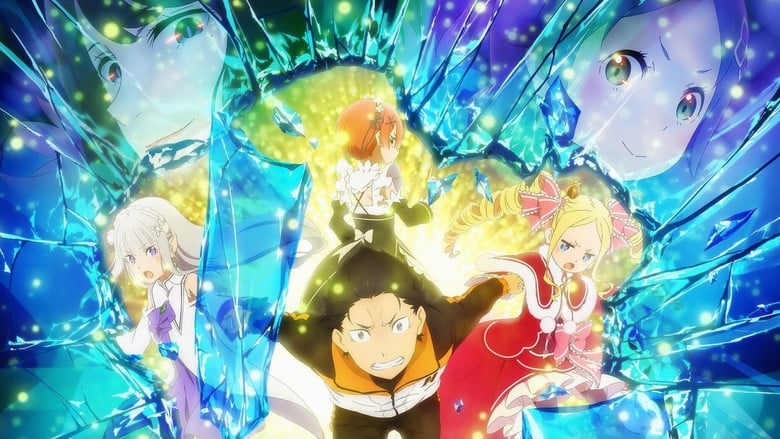
This deconstruction reaches its zenith in the celebrated Episode 15, "The Outside of Madness." Here, the show sheds any pretense of being an action-adventure. The direction slows to a crawl, forcing us to watch a catatonic Subaru be carried through a massacre. The silence is deafening, punctuated only by the crunch of snow and the grotesque laughter of the antagonist, Petelgeuse. It is a masterclass in despair, stripping the protagonist of his agency until he is nothing but a witness to his own failure. The scene where the credits roll over a frozen, headless tragedy is not just a cliffhanger; it is an emotional abyss that few animated series dare to explore.
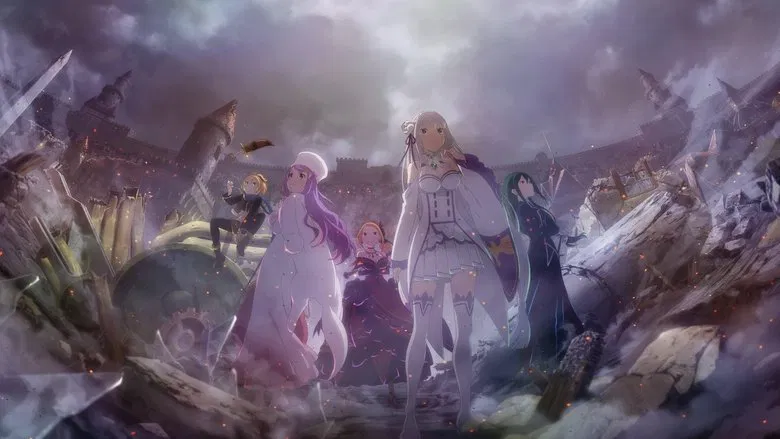
Ultimately, *Re:ZERO* endures because it refuses to let its protagonist—or its audience—off the hook. It argues that love is not a reward for heroism, but a burden that requires constant, painful sacrifice. Subaru is not a hero because he is strong; he is a hero because he remains kind despite a universe that repeatedly murders him. In a genre obsessed with gaining levels and acquiring skills, *Re:ZERO* posits a more human, terrifying thesis: the only way to move forward is to die to your past self, over and over again.