The Silent Scream of the Red BowtieIt is a peculiar tragedy when creators are forced to dismantle their own monuments. In 1975, William Hanna and Joseph Barbera, the architects of the most violent, kinetic, and artistically precise rivalry in animation history, returned to *Tom and Jerry*. But the landscape had shifted beneath their feet. The theatrical freedom of the 1940s and 50s—where pain was the punchline and destruction was a symphony—had been replaced by the sanitizing grip of 1970s television broadcast standards. The result, *The New Tom & Jerry Show*, is not merely a disappointment; it is a fascinating artifact of cultural censorship, a surreal dream where the predator and prey are forced into a rigid, smiling détente.

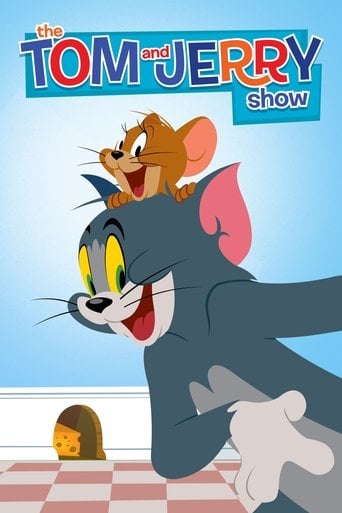
Visually, the series suffers from the "Saturday Morning" flatness that plagued the era. Gone are the lush, hand-painted backgrounds and the fluid, squash-and-stretch elasticity that won seven Academy Awards. In their place is the stiff, limited animation of the assembly line. The characters glide rather than run; they pose rather than react. The most jarring visual signifier of this new world order is Jerry’s red bowtie. It is a superfluous accessory that serves no narrative function other than to civilize the mouse, marking him not as a mischievous pest, but as a respectable citizen. It is a collar of conformity, signaling that the chaotic id of the original series has been domesticated.

The narrative heart of the show is where the dissonance becomes deafening. The central conflict—the Darwinian struggle between cat and mouse—is erased. In this iteration, Tom and Jerry are "best friends," or at most, friendly competitors in low-stakes sporting events and mystery-solving capers. Watching them share a tent or collaborate to solve a crime feels like watching two retired gladiators playing canasta; the tension is gone, replaced by an eerie, enforced pleasantness. The silence is particularly heavy. The original shorts were operatic, relying on Scott Bradley’s frenetic jazz scores to sell the violence. Here, the soundscape is sparse, filled with stock Hanna-Barbera sound effects and polite dialogue that explains jokes rather than showing them.

Ultimately, *The Tom and Jerry Show* (1975) stands as a testament to the misplaced good intentions of television regulation. By removing the "harmful" slapstick, the network executives didn't just remove the violence; they removed the catharsis. The original cartoons were about resilience—no matter how flat Tom was squashed, he always sprang back into shape. This 1975 version offers no such resilience because it offers no struggle. It is a show about a cat who cannot hunt and a mouse who has nothing to run from, trapped together in a purgatory of polite cooperation. It is a bloodless, toothless shadow of a masterpiece, proving that without the risk of the frying pan, the handshake means nothing.