The Architecture of HungerIn the landscape of modern urban fantasy, the witch has evolved from a cackling crone to a vessel for female rage. But in *Domino Day* (2024), creator Lauren Sequeira attempts something more fragile and frantic: the witch as an addict of her own survival. This is not a story about mastering the elements, but about the exhausting, messy architecture of hunger. Set against the rainy, neon-streaked backdrop of Manchester, the series offers a British answer to the supernatural procedural, trading the glossy sheen of American counterparts for a gritty, grounded exploration of isolation in the digital age.
The series introduces us to Domino (Siena Kelly), a powerful witch cursed with an insatiable need to feed on human energy. Her hunting grounds are not enchanted forests, but the sordid swipe-right ecosystem of dating apps.

Visually, the show distinguishes itself through a "witch noir" aesthetic that feels uniquely Mancunian. Directors Eva Sigurdardottir and Nadira Amrani reject the Gothic castles of traditional lore for the claustrophobia of concrete underpasses and cramped flats. The cinematography favors a suffocating intimacy; the camera lingers on the micro-expressions of Siena Kelly’s face, capturing the precise moment desire curdles into predation. The special effects—often a weak point in budget-conscious television—are deployed sparingly but effectively. Magic here is not a sparkle; it is a visceral, invasive extraction of light that feels closer to a drug hit than a spell.
At its heart, *Domino Day* is a parable about the terrifying vulnerability of intimacy. Domino is not merely a predator; she is a woman terrified of her own appetite. The script cleverly uses the supernatural premise to dissect the dynamics of modern consent and the transactional nature of online dating. When Domino feeds on a man who has just violated her boundaries, the show flirts with a "revenge fantasy" trope, yet it refuses to let the audience—or Domino—feel entirely comfortable with the justice meted out. This moral ambiguity is the show's strongest muscle. Kelly’s performance is a tightrope walk of desperation and defiance, grounding the fantastical elements in a very human loneliness.
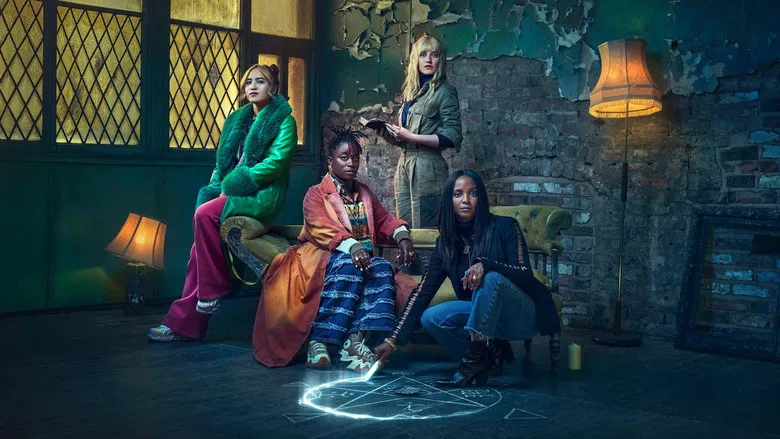
However, the narrative occasionally stumbles under the weight of its own lore. As Domino is tracked by a local coven who view her as a threat to their secrecy, the show shifts from a character study into a more conventional ensemble drama. While the coven offers a necessary counterpoint—a vision of magic as community rather than a curse—the exposition required to build their world sometimes slows the kinetic energy of Domino’s personal unraveling. The tension between the "monster of the week" dating app encounters and the overarching coven politics can feel disjointed, as if two slightly different shows are fighting for dominance.
Despite these structural wobbles, *Domino Day* succeeds because it treats magic not as a superpower, but as a burden. It asks a compelling question: in a world that demands women shrink themselves to fit into polite boxes, what happens when one woman’s power is simply too big, too hungry, and too messy to contain? It is a flawed but fierce entry into the genre, suggesting that the most dangerous demons are not the ones we summon, but the ones we meet for a drink on a Tuesday night.