The Candy Man’s Arrested DevelopmentTo revisit Tim Burton’s *Charlie and the Chocolate Factory* (2005) is to step not into a world of pure imagination, but into the beautifully bruised psyche of an eternal child. While Mel Stuart’s 1971 classic gave us a Willy Wonka who was a benevolent, if slightly dangerous, trickster god, Burton and his longtime muse Johnny Depp strip away the charm to reveal something far more brittle: a man trapped in the amber of his own unresolved childhood.
Burton has always championed the misunderstood outsider, from *Edward Scissorhands* to *Ed Wood*. Here, he applies that gothic empathy to the most colorful capitalist in literature. The film is less a whimsical musical and more a candy-coated psychological case study. It suggests that the creation of joy is often a lonely, neurotic enterprise.
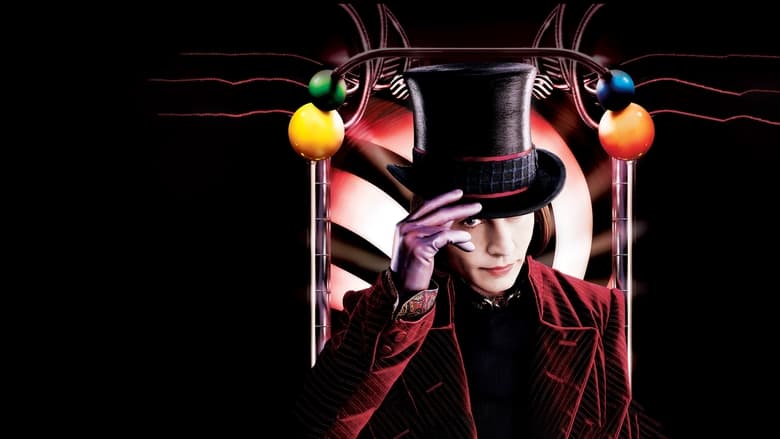
Visually, the film is a triumph of synthetic wonder. Production designer Alex McDowell creates a factory that feels like a collision between 1960s pop art and German Expressionism. The initial sight of the factory—a towering, smokestack-laden fortress looming over a greyscale, Dickensian town—sets the stakes immediately. The warmth of the Bucket household, with its leaning walls and cabbage soup poverty, offers a stark, tactile humanity that grounds the film before we launch into the sterile, fluorescent madness of Wonka’s domain.
Depp’s performance remains the film’s most divisive element, and arguably its most fascinating risk. He eschews Gene Wilder’s paternal warmth for a frantic, high-pitched alienation. With his bobbed haircut and translucent skin, this Wonka looks like a doll that has been kept in its box too long. He recoils from human touch and wields slang decades out of date. This is not a wizard; this is a recluse whose only connection to the world is the confectionary he manufactures but cannot truly enjoy.
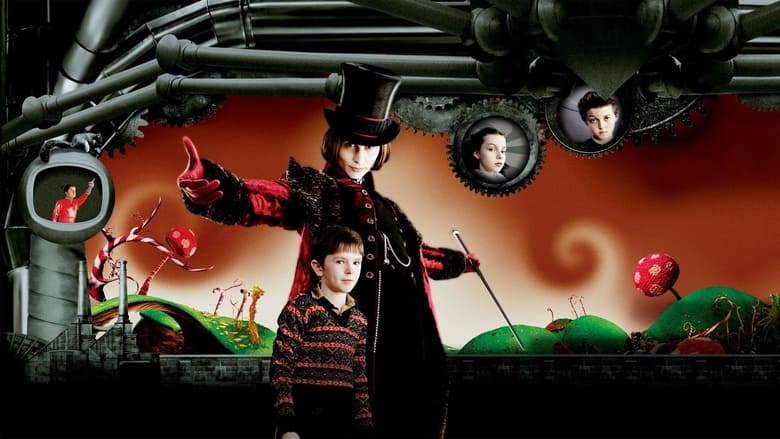
The narrative divergence that most clearly marks this as a Burton film is the invention of Dr. Wilbur Wonka, the dentist father played with severe brilliance by Christopher Lee. Purists often bristle at this addition, arguing it over-explains the mystery. Yet, within Burton’s oeuvre, it is essential. The flashbacks to young Willy trapped in a terrifying metal dental brace provide the "Rosebud" for his candy empire. The chocolate factory is not just a business; it is a rebellion against the father, a cathedral built to the very thing his father forbade.
This reframes the entire Golden Ticket contest. It isn't just a search for an heir; it's a desperate grasp for family by a man who doesn't understand the concept. When Charlie Bucket (a tender, grounding Freddie Highmore) refuses to leave his family for the factory, it breaks Wonka’s worldview. The scene where Wonka realizes that Charlie’s poverty-stricken home contains a wealth he possesses nowhere in his vast industrial playground is the film’s emotional anchor.
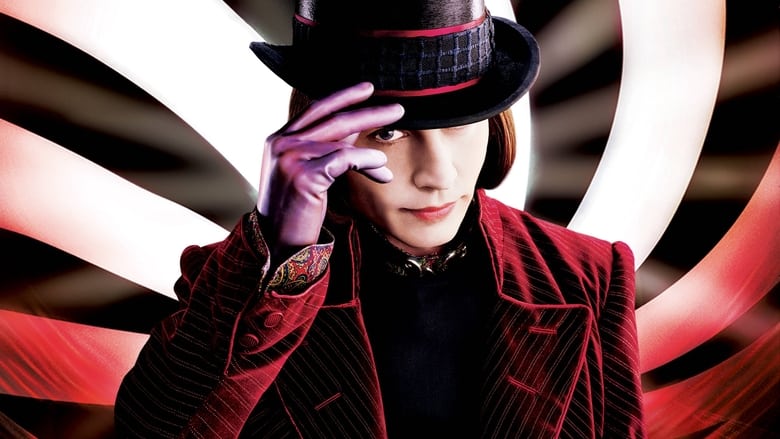
Ultimately, Burton’s *Charlie* is a darker, more cynical confection than its predecessor, but it is perhaps more honest about the cost of genius. The Oompa-Loompas (all played by Deep Roy) are not a chorus of moral arbiters but a clone army of indifferent workers, and the punishments inflicted on the bad children are executed with a sadistic, glossy precision.
The film serves as a reminder that fantasy is often a defense mechanism. Burton’s Wonka built a wall of chocolate to keep the world out, only to find that he had locked himself in. It is a visually suffocating, emotionally complex work that asks us to look past the sugar rush and see the cavity rotting underneath.