The Melancholy of MagicIf the original *Adventure Time* was a chaotic, sugar-rushed playground for the boundless imagination of childhood, *Fionna & Cake* is the hangover that follows in adulthood. It is a series that dares to ask what happens after the "happily ever after," when the hero hangs up their sword and the villain is cured of their madness, only to find that sanity is far lonelier than insanity ever was. Showrunner Adam Muto has crafted not just a spinoff, but a sophisticated epilogue that trades the vast, colorful sprawl of Ooo for the claustrophobic interiors of a depression-era apartment and the darker corners of the multiverse.
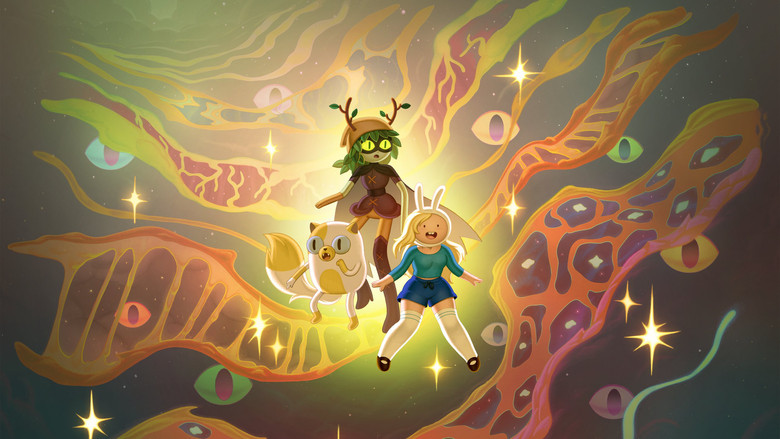
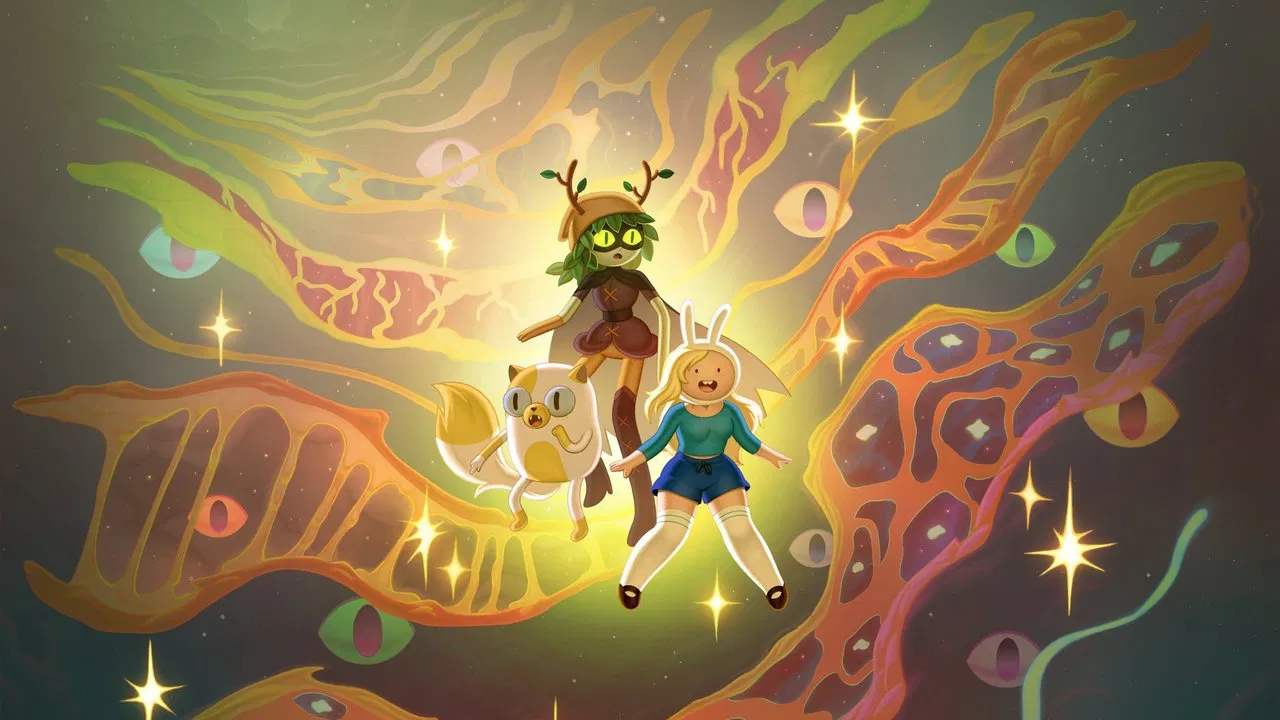
Visually, the series operates on a striking duality. We begin not in the Candy Kingdom, but in a drab, non-magical city that feels oppressively real—a world of bus fares, unpaid bills, and the crushing weight of routine. The animation here is muted, almost suffocating, contrasting sharply with the vibrant, elastic fluidity of the multiverse sequences. When the characters eventually break through to other dimensions, the visual language shifts violently—from the desolate, vampire-infested apocalypse of a timeline where the Star vanished, to the sterile, bureaucratic nightmare of the cosmic auditors. The show uses these aesthetic shifts not just for spectacle, but to externalize the internal states of its protagonists: the grey dullness of Fionna’s dissatisfaction and the chaotic fragmentation of Simon’s grief.
At its core, *Fionna & Cake* is a character study of Simon Petrikov, the man formerly known as the Ice King. While the titular duo provides the narrative thrust, Simon provides the emotional anchor. The tragedy of the Ice King was always that he didn’t know what he had lost; the tragedy of Simon is that he remembers everything. Tom Kenny gives a career-best vocal performance, imbuing Simon with a fragile, weary humanity that is heartbreaking to witness. He is a man out of time, a relic of a magical war living in a reconstructed peace he doesn't feel he belongs in. His journey is a deconstruction of the "magic cure" trope; regaining his mind didn’t fix his life, it just left him acutely aware of the hole where his fiancée, Betty, used to be.

The series brilliantly utilizes the multiverse not as a fan-service vehicle—though seeing alternate versions of Finn and Jake is undeniable fun—but as a therapy session writ large. Every universe they visit acts as a funhouse mirror for the characters' own insecurities. The "Winter King" universe, where a sane but sociopathic variant of Simon has transferred his madness to Princess Bubblegum, is a chilling examination of the selfishness often disguised as survival. It forces our Simon to confront the uncomfortable truth that his devotion to the past might be a form of narcissism, a refusal to engage with the present. Fionna, meanwhile, learns that her desire for a "magical" life was a desire for external validation to fill an internal void, realizing that trauma is not a prerequisite for importance.

Ultimately, *Adventure Time: Fionna & Cake* triumphs because it respects its audience enough to grow up. It rejects the easy nostalgia of a "greatest hits" tour in favor of a messy, complicated meditation on purpose. It posits that the most heroic act isn't slaying a dragon, but finding the will to get out of bed when the magic has faded. In a landscape saturated with endless franchise expansions, this series stands apart as a rare work of art that justifies its existence by adding depth, rather than just length, to the story it tells.