The Cost of Truth in a Broken WorldIn the modern landscape of South Korean thrillers, there is often a tension between the procedural and the personal—a struggle to balance the mechanics of a "whodunit" with the bleeding heart of "whydunit." *The Price of Confession*, directed by Lee Jung-hyo, abandons this balancing act entirely, opting instead for a narrative freefall into the abyss of female rage and systemic failure. While the series initially masquerades as a courtroom drama, it quickly sheds its legal skin to reveal a tragedy about two women bound by a pact that is less about murder and more about survival in a world designed to crush them.
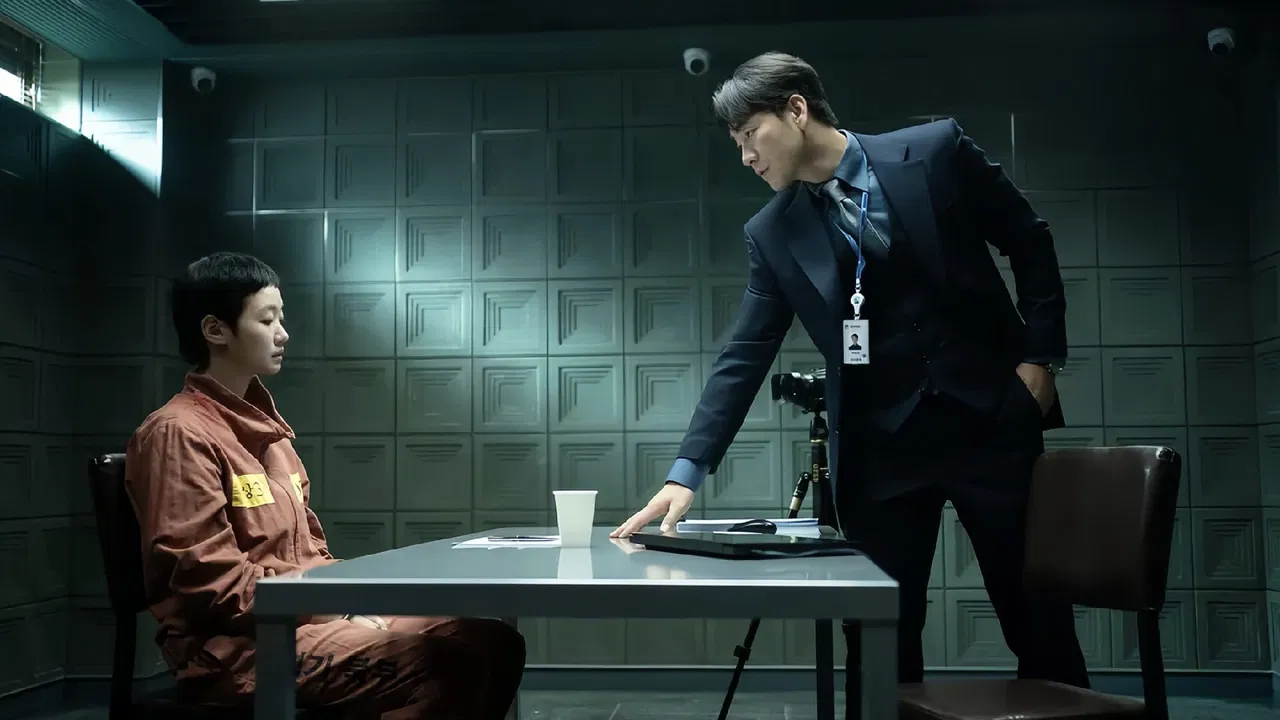
Lee Jung-hyo, known for the lush romanticism of *Crash Landing on You* and the stylistic pop-art of *Doona!*, executes a sharp pivot here. He trades warmth for a cold, clinical visual language that reflects the protagonist’s isolation. The series is bathed in sterile prison grays and suffocatingly dark interiors, only occasionally punctured by the saturated, almost hallucinogenic flashbacks of the mysterious Mo Eun. This is not a world where justice is blind; it is a world where justice is actively malicious, a machine that grinds up the vulnerable to protect the powerful.
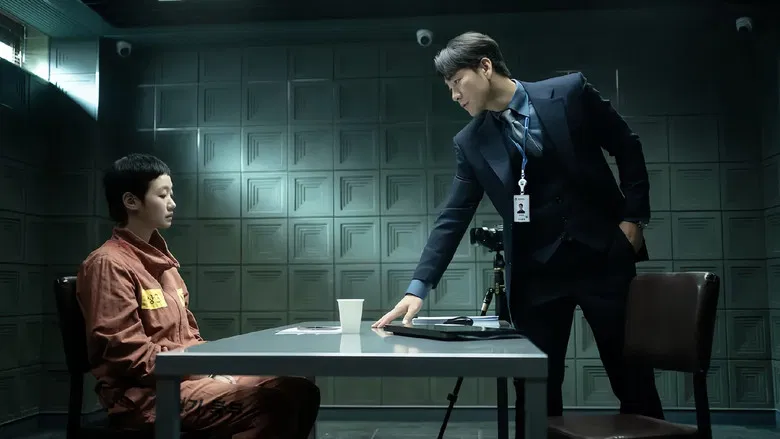
At the center of this storm are two performances that anchor the series even when the plot threatens to spiral into melodrama. Jeon Do-yeon, as the wrongfully accused art teacher Ahn Yun-su, delivers a masterclass in suppressed hysteria. Her Yun-su is not a noble victim; she is messy, morally ambiguous, and terrified, grounding the show’s more operatic twists in a gritty reality. Watching her negotiate her humanity within the brutal hierarchy of prison is harrowing.
However, the show’s gravitational pull belongs to Kim Go-eun as Mo Eun, the enigmatic inmate known as "The Witch." Kim, often cast in roles of spirited resilience, here plays a creature of pure void. Her performance is a study in stillness; she uses silence as a weapon, her eyes conveying a lifetime of trauma that the script wisely leaves largely unspoken until the final act. The chemistry between these two women is the series' true engine—a relationship defined not by friendship, but by a desperate, jagged necessity.
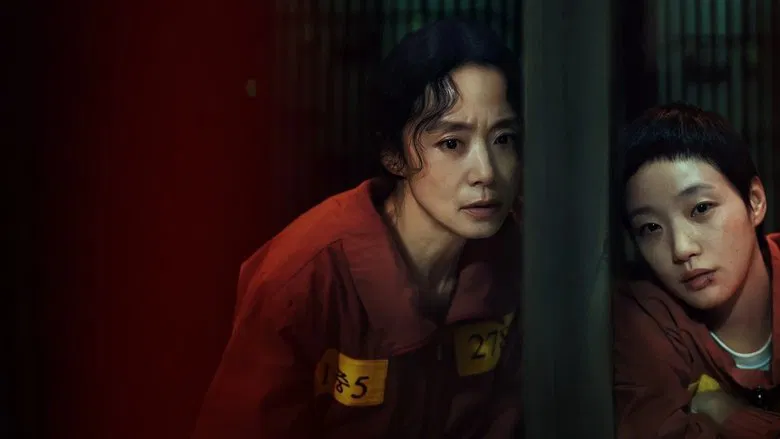
The narrative conceit—a "strangers on a train" style exchange of murders—is where the show takes its biggest risks. The script, written by Kwon Jong-kwan, asks the audience to suspend disbelief as the women navigate a labyrinth of conspiracies involving corrupt prosecutors and hidden traumas. There are moments where the plot strains under its own complexity, particularly in the middle episodes where the procedural elements drag. Yet, the series redeems itself by constantly returning to its central thesis: that for women in this society, the "truth" is a luxury item they cannot afford. The only currency that matters is leverage.
One cannot discuss *The Price of Confession* without addressing its refusal to offer a cathartic, neat resolution. The finale is a bruising affair that rejects the traditional triumph of the legal system. Instead, it suggests that justice is merely a story we tell ourselves to sleep at night, while real resolution is often bloody, partial, and purchased at a terrible cost. The final images, haunting and bittersweet, linger like a bruise—a reminder that some stains can never be washed away, only carried.

Ultimately, *The Price of Confession* is a demanding watch. It requires patience for its pacing and a stomach for its emotional cruelty. But for those willing to pay the price of admission, it offers a searing portrait of solidarity forged in hell. It is not just a mystery to be solved, but a scream to be heard—a testament to the lengths one will go to reclaim a life that was stolen.