The End of the World With a VIP PassThere is a specific texture to the anxiety in *Paradise*, the new Hulu series from Dan Fogelman, that feels uncomfortably modern. It is the anxiety of the privileged survivor. If Fogelman’s previous cultural juggernaut, *This Is Us*, was a machine designed to extract tears through the relatability of family grief, *Paradise* is a machine designed to extract tension through the absurdity of American exceptionalism. Reunited with the formidable Sterling K. Brown, Fogelman trades the domestic weepie for a post-apocalyptic noir, asking a question that is both cynical and riveting: When the world ends, who gets the best seats on the life raft?
The premise initially presents as a high-gloss murder mystery. In a serene, sun-drenched community of the ultra-wealthy, the tranquility is shattered when the President of the United States (a charismatic, slippery James Marsden) is found dead. But the show quickly pulls back the curtain on its central conceit: this isn't just a gated community; it is a city-sized bunker buried beneath the earth, shielding a hand-picked elite from a global extinction event. The sunshine is synthetic; the horizon is a screen.
Visually, the series excels at creating an atmosphere of the "uncanny valley." The direction emphasizes the terrifying sterility of this new world. We see mechanical ducks winding through artificial ponds and bus schedules that announce a delay in the sunset due to "maintenance." It creates a suffocating sense of reality where the environment itself is gaslighting the characters. The cinematography captures the sheen of luxury—marble countertops, manicured lawns—but films them with a cold, clinical detachment that suggests a mausoleum rather than a sanctuary. It is a visual metaphor for the hollowness of a life preserved without the chaos of the natural world.
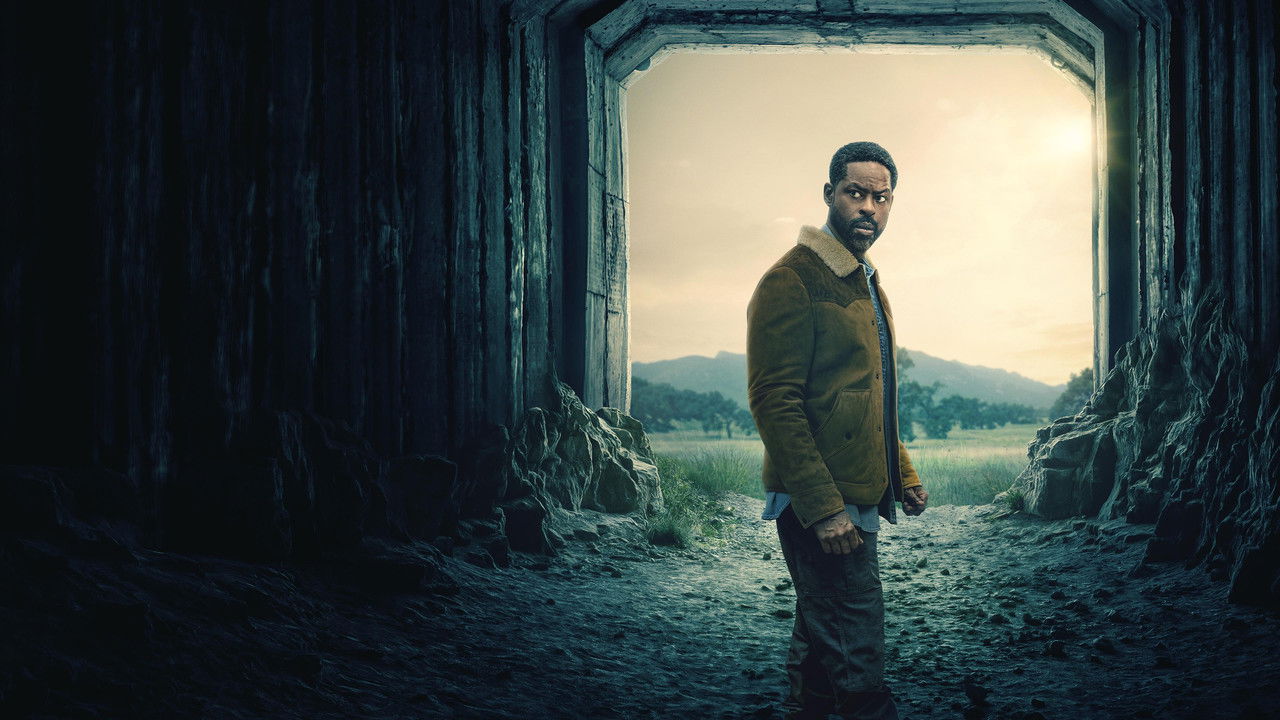
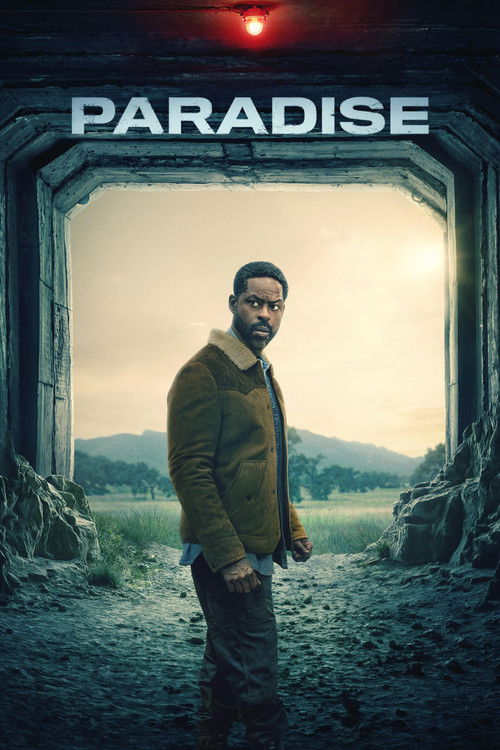
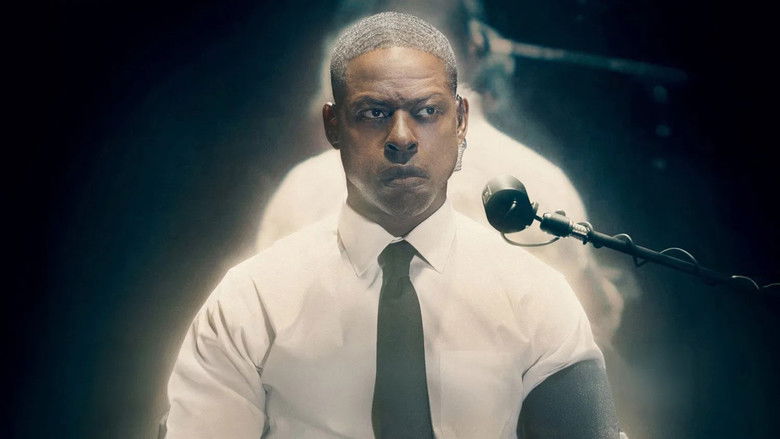
At the center of this artificial sun is Sterling K. Brown as Xavier Collins, a Secret Service agent whose eyes carry the weight of the entire world left behind. Brown gives a performance of coiled intensity. Unlike the emotional availability of his role in *This Is Us*, here he is a man actively repressing his humanity to survive. He is the audience's anchor in a sea of eccentrics and billionaires who view the apocalypse as a mere inconvenience to their lifestyle.
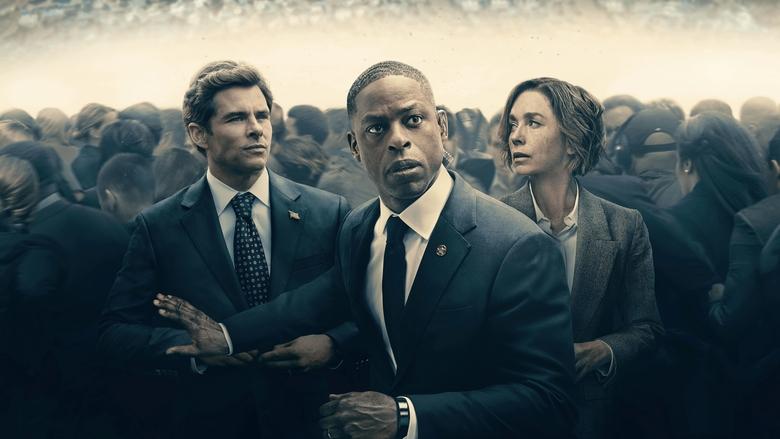
The narrative collapses occasionally under its own ambition. In its rush to be both a sci-fi puzzle box and a political thriller, *Paradise* sometimes relies on narrative conveniences that strain credulity. The "mystery" elements can feel like a nostalgic throwback to the era of *Lost*, where questions are piled atop questions with a reckless enthusiasm. However, the show finds its emotional truth in the friction between the classes. Even at the end of the world, there are those who serve and those who are served. Julianne Nicholson, playing the power broker "Sinatra," embodies the terrifying pragmatism of the ruling class, providing a chilling counterpoint to Brown’s moral exhaustion.

Ultimately, *Paradise* succeeds not because of its twists, but because of its underlying cynicism about human nature. It suggests that even if we could reboot civilization, we would likely replicate the same hierarchies, the same deceits, and the same violence, just with better lighting. It is a pulpy, sometimes messy, but undeniably gripping reflection of our current anxieties—a reminder that no matter how deep you bury your head in the sand (or the bunker), the truth has a way of digging you out.