✦ AI-generated review
The Sun at the End of the World
To call *One Piece* a television series is a category error; it is a lifestyle, a decades-spanning pilgrimage that has outlasted marriages, presidencies, and entire eras of technology. Since its debut in 1999, Toei Animation’s adaptation of Eiichiro Oda’s magnum opus has swollen into a modern *Odyssey*, a sprawling, kaleidoscopic epic that weaponizes absurdity to tell a profoundly human story about the cost of freedom. In an age of compressed storytelling and ten-episode binge models, *One Piece* stands as a defiant monument to the slow burn, demanding not just our attention, but a significant percentage of our lives.
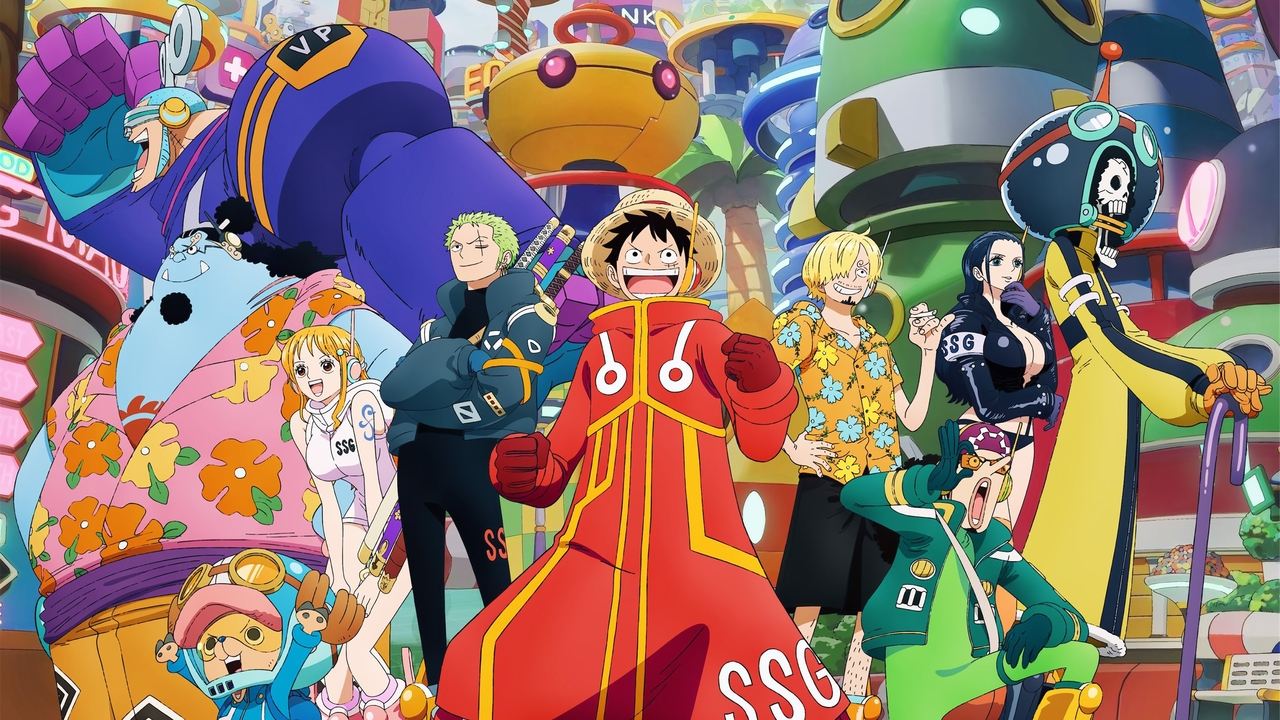
Visually, the series is a geological record of the anime industry itself. The early episodes, trapped in the 4:3 aspect ratio of the late nineties, possess a rough, cel-shaded charm—all primary colors and static backgrounds. It was humble, almost crude. Yet, as the narrative scope expanded, so did the aesthetic ambition. To watch *One Piece* in chronological order is to witness the medium evolve in real-time. The journey moves from the flat, storybook simplicity of the East Blue to the avant-garde, neon-drenched spectacle of the Wano Country arc, where the line work thickens and the animation achieves a fluidity that rivals feature films. The visual language shifts to match the stakes; what began as a slapstick rubber-man comedy has metamorphosed into an operatic clash of ideologies, painted in strokes of Hokusai and Kandinsky.
However, the show’s endurance does not stem from its fight scenes, which frequently suffer from the medium’s worst habits—padded runtimes and recycled reaction shots that test the patience of even the most devout acolyte. The narrative often collapses under its own ambition, dragging a twenty-minute plot point across five episodes of meaningful glaring. But to fixate on the pacing is to miss the forest for the Devil Fruit trees. The true currency of *One Piece* is emotional interconnectedness.
At its heart, this is a story about the trauma of loneliness and the healing power of found family. The protagonist, Monkey D. Luffy, is a deceptively simple vessel. He has no internal monologue and no desire to rule in the traditional sense; he simply wishes to be the "freest person on the sea." This purity allows him to act as a moral tuning fork for the world around him. The series’ most enduring image is not a fist punching a villain, but a hand reaching out to a friend. When Nami, the navigator, finally breaks down and asks for help in the Arlong Park arc, or when Robin cries out her desire to live at Enies Lobby, the show transcends its shonen genre trappings. These are scenes of devastating vulnerability, anchored by voice performances (particularly Mayumi Tanaka’s Luffy) that pierce through the wackiness of talking reindeer and cyborg shipwrights.
*One Piece* posits that authority—whether it be the World Government or the concept of "destiny" itself—is an inherent shackle, and that the only righteous act is rebellion. It is a story where the goofy and the profound hold hands; a world where a man dressed as a baby can deliver a heart-wrenching monologue on love and loss.
Ultimately, *One Piece* is a triumph of maximalism. It asks us to believe that a story can go on forever without losing its soul. While its sheer length is a formidable barrier to entry, those who brave the waters find something rare in modern fiction: a boundless, un-cynical optimism. It is a long, often messy voyage, but the sun shining on the horizon is real.