✦ AI-generated review
The Mirror in the Glass Cage
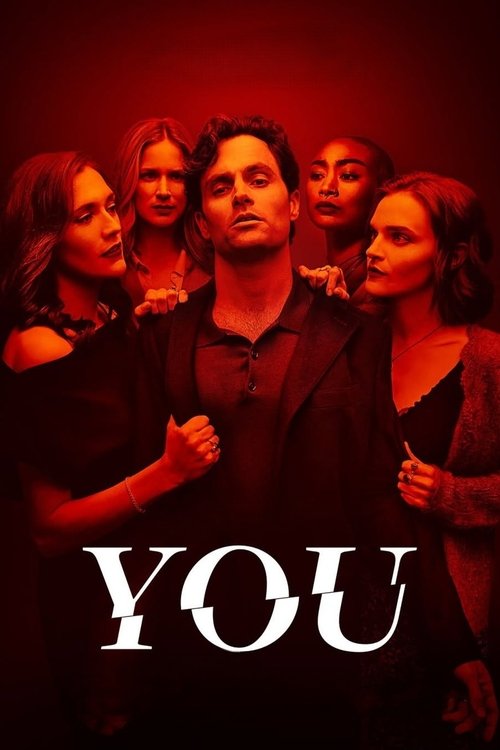
We have always loved monsters, provided they speak in the cadence of a romantic lead. In the landscape of modern television, few creatures have navigated this dissonance as deftly as Joe Goldberg, the protagonist of Netflix’s *You*. For five seasons, culminating in its 2025 finale, the series has operated not merely as a crime thriller, but as a scathing satire of the "Nice Guy" trope—a dark mirror held up to a culture that often mistakes possession for affection and surveillance for intimacy.
To watch *You* is to be complicit in a seduction. The series, originally adapted from Caroline Kepnes’ novels, relies heavily on a specific visual and auditory language to trap the viewer alongside Joe’s victims. We are rarely allowed outside of Joe’s perspective. Through Penn Badgley’s hypnotic, omnipresent voiceover, the audience is forced into the claustrophobic confines of his skull. We hear his justifications before we see his crimes; we are privy to the "logic" of his stalking before the blood is spilled. The camera reinforces this complicity, frequently adopting a point-of-view shot that forces us to gaze *at* women rather than *with* them. The now-iconic visual motif of the glass cage—pristine, soundproof, and transparent—serves as the perfect metaphor for Joe’s worldview: he wants to see everything, to control the environment completely, yet he remains terminally separated from true human connection.
At its heart, the series is a tragedy of identity wrapped in the skin of a slasher. Joe Goldberg is not simply a killer; he is a curator of self. Whether he is playing the humble bookstore manager in New York, the enlightened suburban dad in Madre Linda, or the bearded academic in London, Joe is perpetually performance-arting his way through life. Badgley’s performance is nothing short of a tightrope walk; he infuses Joe with just enough wounded vulnerability to make the sudden eruptions of violence jarring. The terror of the series lies in this oscillation. We are reminded that the most dangerous men are not the ones who look like monsters, but the ones who remember your favorite book, validate your insecurities, and then punish you for failing to live up to the fantasy they projected onto you.
Ultimately, *You* concludes its run not by redeeming its anti-hero, but by stripping away the last of his—and our—illusions. By the time the final credits roll on the fifth season, the show has systematically dismantled the "romantic" veneer it constructed. It forces us to confront the uncomfortable truth that for years, we have been rooting for a predator simply because he was the one telling the story. In the end, Joe Goldberg isn't a victim of love; he is the inevitable result of a society that teaches men that "no" is just the start of a negotiation, and that persistence is the highest form of devotion. The glass cage was never just for his victims; it was the lens through which we were all watching.