✦ AI-generated review
The Unblinking Eye of the Storm
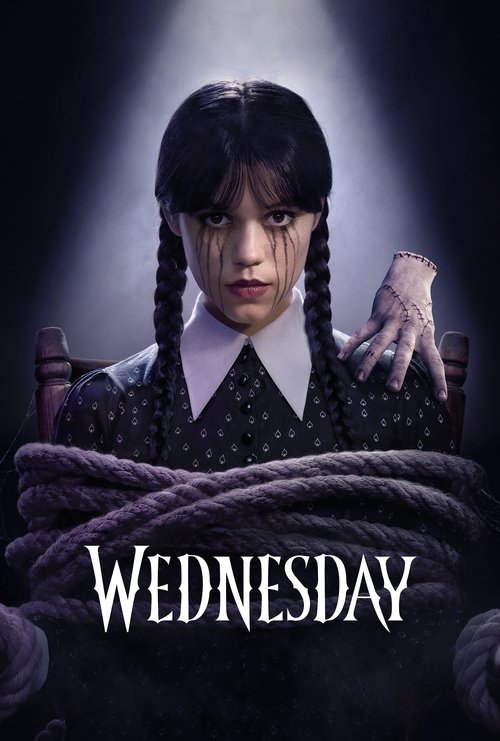
Adapting the Addams Family has always been a precarious balancing act. Charles Addams’ original *New Yorker* cartoons were single-panel gags—static snapshots of the macabre interrupting the mundane. To stretch that static joke into a narrative arc, especially one confined by the rigid structures of modern Young Adult television, is to risk diluting the very arsenic that makes the family so delicious. Netflix’s *Wednesday* (2022), however, manages to walk this tightrope, largely by anchoring itself not in the family, but in the singular, terrifying, and oddly deeply human gravity of its titular character.
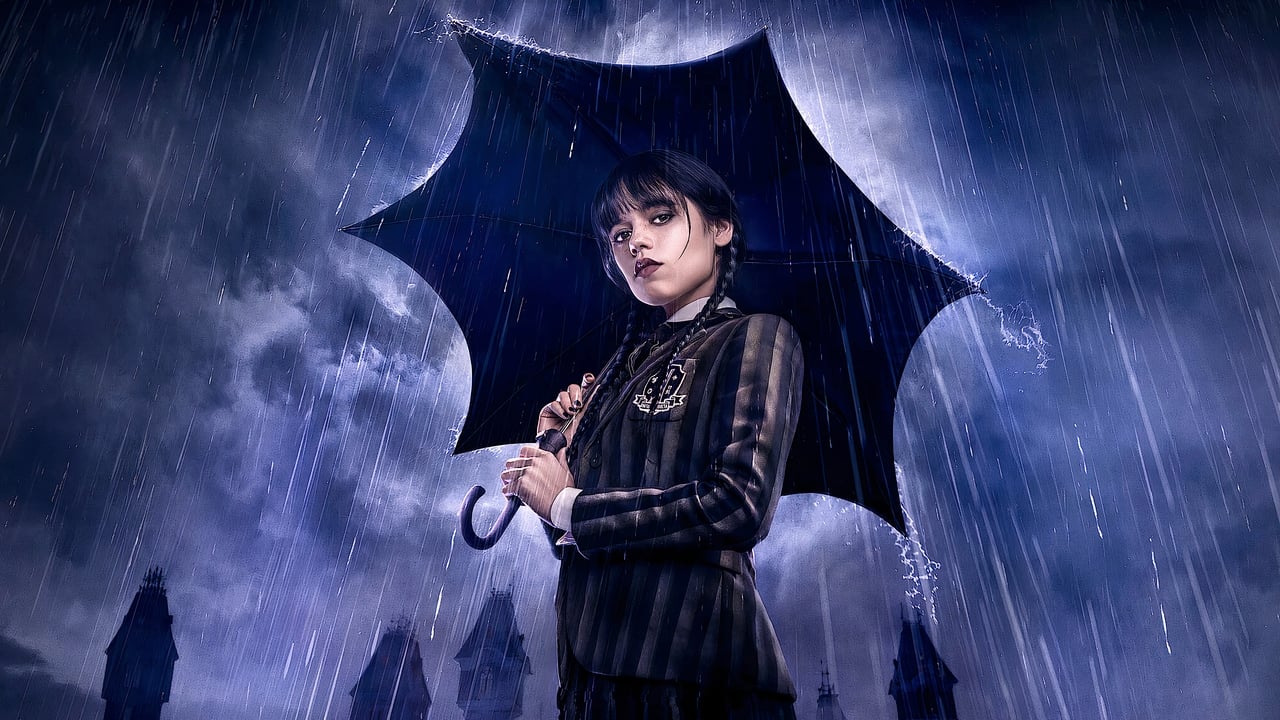
From the opening moments—where Wednesday Addams (Jenna Ortega) unleashes a swarm of piranhas into a swimming pool to avenge her brother—director Tim Burton establishes a visual language that is less about horror and more about the aesthetic of alienation. The series situates Wednesday at Nevermore Academy, a boarding school for "outcasts," yet even here, she remains a pariah. This is the show's smartest visual trick: by placing a monochrome figure in a world of Technicolor werewolves and sirens, Burton and his team create a constant, vibrating tension. The production design, particularly in the dormitory room split down the middle—one side a vomiting of rainbows for roommate Enid, the other a void of shadow for Wednesday—serves as the show’s central metaphor. It is a clash between the performative positivity of modern teen life and the brutal, unvarnished honesty of the gothic heroine.
The series is not without its concessions to the "content" machine. The narrative architecture is built on the familiar bones of *Harry Potter* and *Riverdale*—a prophecy, a monster in the woods, a love triangle that feels mathematically generated rather than organically felt. At times, the mystery plot sags under the weight of its own exposition, threatening to reduce the unique Addams spirit to just another generic supernatural detective story.
Yet, the series is rescued, elevated, and ultimately defined by Jenna Ortega. Her performance is a masterclass in physical restriction. By choosing not to blink and by holding her body with the rigidity of a Victorian doll, Ortega forces the audience to lean in. She acts with the precision of a silent film star, channeling Buster Keaton’s deadpan resilience. The now-iconic dance sequence in Episode 4, set to The Cramps' "Goo Goo Muck," is not merely a viral moment; it is a character thesis. In those jerking, angular movements, Wednesday is not performing for the male gaze or social approval; she is communing with her own strange frequency. It is a moment of pure, weaponized sincerity that cuts through the formulaic teen drama surrounding her.
Ultimately, *Wednesday* succeeds because it understands that its protagonist is not a villain, but a truth-teller. In a generation obsessed with curated self-image and social connectivity, Wednesday Addams represents the fantasy of opting out. She rejects the digital noise, the forced smiles, and the desperate need to be liked. While the show around her occasionally succumbs to the very clichés she despises, Wednesday herself remains an unmovable object. She is a reminder that in a world demanding we all be sunny and bright, there is a profound, artistic dignity in remaining steadfastly, unapologetically dark.